This page sets out the rules as Türkiye's government agencies publish them. A lawyer and a tax adviser who work for the buyer apply them to a specific purchase and family.
How the route works in September 2026
The title deed is where a purchase becomes a citizenship file. The buyer names citizenship as the purpose. The deed records it, and the buyer declares a three-year hold on any sale. The Investment Office calls this citizenship by exceptional procedures, for real estate worth USD 400,000 and more. 2
From there, an apartment in Istanbul and a house on the coast follow the same path, from a Land Registry certificate through a security check to the President's decision. The timeline section below sets out each step. 4, 7, 6
The rules move often. The Land Registry's citizenship page lists six amendments to the regulation that took effect between 12 January 2017 and 12 December 2023. The Land Registry's FAQ dates the valuation rules that followed in 2024. Valuation reports dated from 4 March 2024 must come from the valuation company GEDAŞ. From 13 June 2024, a confirmed value below the minimum means the application is rejected. From 9 December 2024, that value sits on an Amount Determination Certificate (TTB). 4, 3
How much does Türkiye citizenship by investment cost?
The qualifying minimum is USD 400,000 in real estate. Five other routes ask for USD 500,000: fixed capital, a bank deposit, government bonds, fund shares or a private pension. A seventh counts 50 new jobs. All seven lead to the same short-term residence permit and the same citizenship application. 1
Table view: Six routes with a dollar minimum
| Item | Value (USD) |
|---|---|
| Real estate | $400,000 |
| Fixed capital investment | $500,000 |
| Bank deposit, held three years | $500,000 |
| Government bonds, held three years | $500,000 |
| Fund shares, held three years | $500,000 |
| Private pension, held three years | $500,000 |
Real estate sits USD 100,000 below the other five dollar routes. The seventh route, creating 50 jobs, is measured in people, so it stays off the chart. Source: 1
The European Central Bank's reference rates for 11 September 2026 were TRY 56.3329 and USD 1.1592 to the euro. At those rates one dollar buys about TRY 48.60, and the USD 400,000 minimum comes to TRY 19,438,544. The legal conversion uses the effective selling rate or cross rate of the Central Bank of the Republic of Türkiye on the determination date. The lira figure moves with that rate. 9, 7
| Cost line | Amount (USD, TRY or %) | How the amount is set |
|---|---|---|
| Qualifying property value | USD 400,000 minimum; TRY 19,438,544 at ECB rates for 11 September 2026 | The confirmed value on the Amount Determination Certificate (TTB), from a GEDAŞ valuation report, must reach the minimum |
| Title-deed fee (tapu harcı) | Set for each file | Calculated on the lira value from the foreign-exchange certificate and sent by text message once the papers pass |
| Revolving-fund service fee (döner sermaye ücreti) | Set for each file | Sent by text message with the title-deed fee |
| Valuation report for the TTB | Quote from GEDAŞ | Requested through the Land Registry's WEBTAPU system; GEDAŞ quotes its fee by e-mail or phone |
| Compulsory earthquake insurance (DASK) | Premium for the building | The policy is on the Land Registry's document list for residential and workplace buildings |
| Property tax | 0.1% to 0.6% a year, plus 10% of that tax | Rate band in the Investment Office tax guide |
| Lawyer, sworn interpreter, advisers and travel | Your own quotes | The Land Registry asks for a sworn interpreter for a party who does not speak Turkish; the residence and citizenship applications are made in person |
The confirm list at the end of this page says where each fee and the insurance premium comes from. Lira: 400,000 × 56.3329 ÷ 1.1592, at ECB reference rates for 11 September 2026.
Across programs, the real cost of citizenship by investment puts the minimum beside the fees and holding costs around it.
What are the property requirements and thresholds?
USD 400,000 clears every minimum in the table below. Four official web pages state it: the Investment Office's property page, the Population and Citizenship Directorate's FAQ, and the Land Registry's citizenship page and FAQ. The Investment Office's guide dated 1 June 2025 says USD 400,000 in its criteria table. Its step-by-step example uses USD 250,000, the figure two question-and-answer entries on the Land Registry's citizenship page date to purchases from 19 September 2018 until 13 June 2022. 2, 6, 4, 3, 7
| Official statement | Date | Property minimum (USD) | Currency wording |
|---|---|---|---|
| Investment Office, Acquiring Property and Citizenship page | Read 14 September 2026 | 400,000 | USD 400,000 or equivalent foreign currency |
| Investment Office citizenship guide (PDF), criteria table | 1 June 2025 | 400,000 | USD or equivalent foreign currency or Turkish lira |
| Same guide, application walkthrough | 1 June 2025 | 250,000 | USD or equivalent foreign currency or Turkish lira |
| Population and Citizenship Directorate, citizenship FAQ | Read 13 September 2026 | 400,000 | USD, equivalent foreign currency or the Turkish lira equivalent |
| Land Registry, Your Key Türkiye citizenship page | Read 14 September 2026 | 400,000 | Quotes the Regulation with the Turkish lira equivalent, then says the 6 January 2022 amendment removed it; the foreign-currency price is sold to a bank for the Central Bank |
| Land Registry, Your Key Türkiye FAQ | Read 14 September 2026 | 400,000 | Quotes the Regulation as USD or equivalent foreign currency; the price is sold in USD or equivalent foreign currency to a bank for the Central Bank |
The Land Registry Directorate is the office that checks the foreign-exchange certificate and the receipts on a citizenship purchase. 4
The Land Registry's citizenship page dates the minimum two ways. Its regulation summary puts USD 400,000 on property bought after 19 September 2018. Two question-and-answer entries on the same page put USD 250,000 on purchases from that date and USD 400,000 on purchases from 13 June 2022. The page disagrees with itself on when USD 400,000 took effect and leaves both versions standing. For a whole property bought today, every part of it gives USD 400,000. 4
| Purchase or contract date | Regulation summary (USD) | Entry on earlier purchases (USD) | Entry on shares (USD) |
|---|---|---|---|
| Bought 12 January 2017 to 18 September 2018 | 1,000,000 | 1,000,000 | 1,000,000 |
| Bought from 19 September 2018 | 400,000 | 250,000 | 250,000 |
| Contract drawn up after 7 December 2018 | 400,000 | 250,000 | Not given |
| Bought or contracted from 13 June 2022 | 400,000 | 400,000 | 400,000 |
The summary lists 13 June 2022 as one of six amendment dates, and its USD 400,000 runs from 19 September 2018. Its 7 December 2018 line covers promise-of-sale contracts; the entry on earlier purchases dates sale and promise-of-sale contracts. The summary adds that a practice of certifying property worth at least USD 250,000 has ended. The entry on shares adds that property acquired as a share after 1 February 2023 cannot be used for citizenship.
What counts toward the minimum
- Built property: since 12 December 2023, farmland and empty plots are excluded. A land parcel needs a building on it. 4
- Whole ownership: property acquired as a share after 1 February 2023 cannot be used for citizenship. The Land Registry's FAQ rules out one property bought by two or more foreigners in shared ownership, and accepts one foreigner buying the whole of it. 4, 3
- Price and payments: the sale price declared on the deed and the total of the payments must each reach USD 400,000, and the TTB confirms both. 4
- Several purchases: any number of properties bought by sale count toward the total. They can be bought at different times. 3
- One promise-of-sale contract: on that route, the whole amount sits in one contract. Files built on two or more are set aside. After 1 February 2023, a promise-of-sale contract cannot fill a gap left by completed purchases. 3, 4
- The confirmed value: the TTB comes from a GEDAŞ valuation report and must reach the minimum. 4, 3
What's the holding restriction and timeline?
Three years is the number that shapes the plan. The property's three-year restriction goes on the title deed at signing. The deposit, bond, fund and pension routes carry the same three-year hold. For those years, the money stays in the asset. 4, 1
Two groups can file on this track. One holds a short-term residence permit under Article 31(1)(j) of Law No. 6458. The other holds a Turquoise Card. On the property route, the first six steps below condense the Land Registry's ten-step roadmap to the investment certificate, and the last two carry the file to the President's decision. 6, 4, 7
Move the money through a bank
Since 24 January 2022, a foreign buyer sells foreign currency to the Central Bank through a bank. The bank issues a foreign-exchange purchase certificate (DAB), and the price on the deed is the lira amount on that certificate. A citizenship purchase also needs the bank receipt for the payment to the seller. 5, 3
Apply to the Land Registry Directorate
The Directorate checks the DAB, the contract and the receipts against the Regulation and the TTB. Then it texts the title-deed and revolving-fund fees. 4
Pay and sign
The fees are paid, and the deed is drawn up and signed. The three-year restriction is recorded on it. 4
Receive the property investment certificate
The Land Registry's General or Regional Directorate runs final checks and issues the Real Estate Investment Determination Certificate. An official letter sends it to the Population and Citizenship Directorate and the Presidency of Migration Management. The buyer gets a copy by e-mail. 4
File for citizenship
The citizenship application goes to the provincial office of the Population and Citizenship Directorate. The Directorate runs an archive check for national-security impediments. A clear file goes to the Minister's office, then to the President's office, and the President decides. 4, 7, 6
Documents on the Land Registry Directorate's list
- The title deed, or the property's registry details
- A passport or national identity card that shows nationality, translated where needed
- The Amount Determination Certificate (TTB)
- A property value certificate (emlak rayiç değeri belgesi) from the municipality, where the municipality still issues one
- The compulsory earthquake insurance policy, for a building
- An identity information form, with a 6x4 photograph taken within the last six months 4
- The foreign identity number, or a tax number when the migration system returns no answer 4
- A bank-approved payment receipt
- A sworn interpreter for any party who does not speak Turkish
- A document showing representation when someone acts for a party; a power of attorney made abroad must meet the conditions of circular 2015/5 4
Each transfer toward the minimum leaves a paper trail the Land Registry reads. Receipts from before the foreign-exchange certificate is issued are in foreign currency, and receipts from after it are in Turkish lira. One row per transfer, with its currency and rate, keeps the file in order. Tracking spending in several currencies covers the method. 3
Should you buy a home to use or a property to hold?
Decide what the building is for before the first viewing. A base in Istanbul for the working months, or a house on the coast for the summers, is a home. An apartment held for the file and little else is an asset. The three-year hold and the valuation rules apply to both. Daily life, from the commute to the noise at night, matters for the home. 4, 3
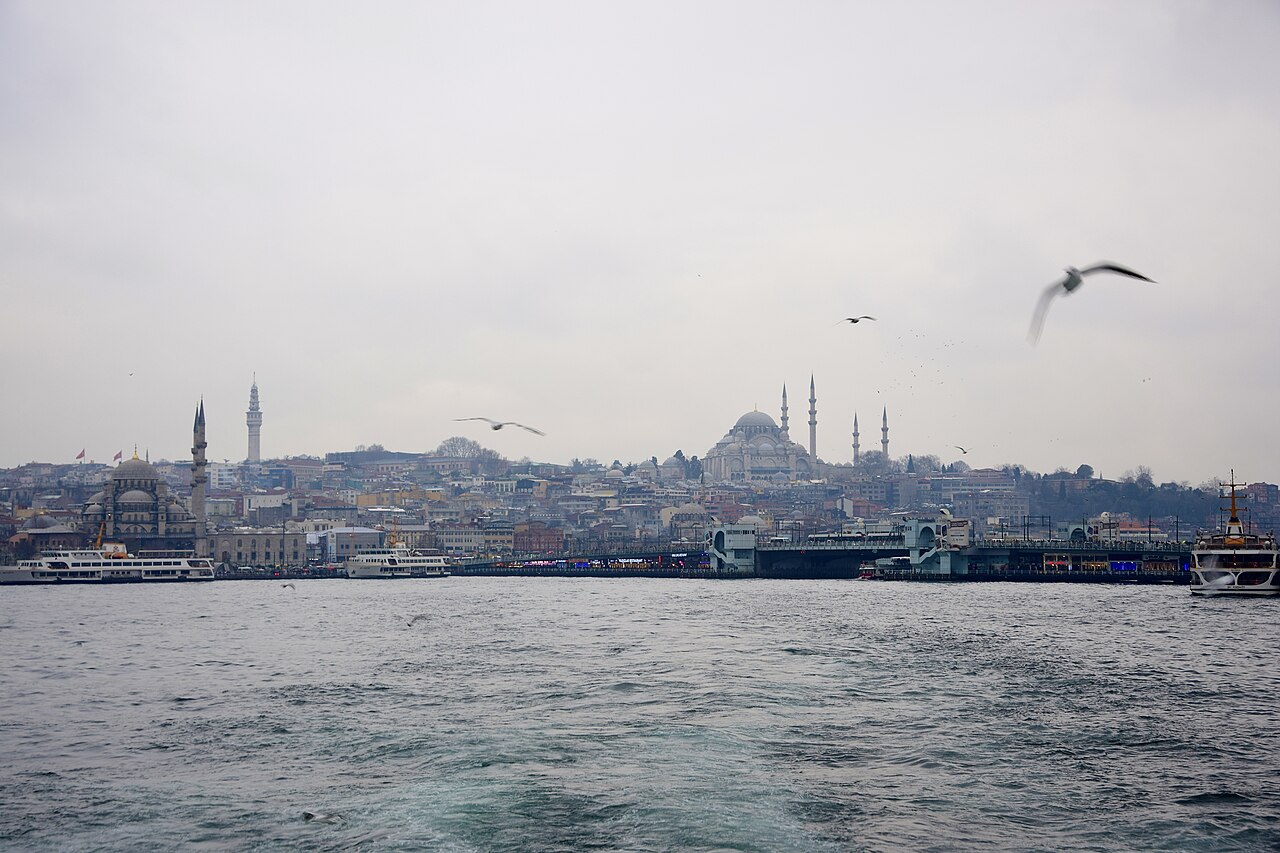
A home earns its place through use. Spend time in the neighborhood in more than one season. Check the building's condition and management, and add the yearly property tax to the running costs. For the city and the country around it, start with the Türkiye travel guide.
An asset held for the application needs an exit plan. For three years the note on the deed keeps the money in the building. When those years end, selling is a new transaction at the Land Registry, with fees of its own. Cash the household needs within those years stays outside the property. 2, 4
Foreign ownership also has two ceilings. One foreign individual can own up to 30 hectares across Türkiye. All foreign individuals together can hold up to 10% of a district's area where private property is allowed. A popular district can reach that ceiling whatever one buyer's budget. 2
What are the investment routes beyond property?
Six other routes reach the same citizenship file. Each has its own certifying authority, and the process starts with that authority's certificate of conformity. 1, 6
| Route | Minimum (USD or jobs) | Holding period | Certified by |
|---|---|---|---|
| Fixed capital investment | USD 500,000 | Not listed | Ministry of Industry and Technology |
| Real estate | USD 400,000 | Three years, recorded on the title deed | Ministry of Environment, Urbanization and Climate Change |
| Job creation | 50 jobs | Not listed | Ministry of Labor and Social Security |
| Bank deposit | USD 500,000 | Three years | Banking Regulation and Supervision Agency |
| Government bonds | USD 500,000 | Three years | Ministry of Treasury and Finance |
| Real estate or venture-capital fund shares | USD 500,000 | Three years | Capital Markets Board of Türkiye |
| Private pension contribution | USD 500,000 | Three years | Insurance and Private Pension Regulation and Supervision Agency |
Names and holding periods as printed on the Investment Office's residence-permit page. The Population and Citizenship Directorate's FAQ uses different names for two authorities: the Ministry of Environment and Urbanization for property, and the Ministry of Family, Labor and Social Services for jobs.
The right route follows what the household is ready to own or run.
- A home the family will use: real estate, with the built-property rule and the confirmed valuation. 4, 3
- Money kept out of buildings: a bank deposit, government bonds, fund shares or a private pension, each at USD 500,000 for three years. 1
- A business run in Türkiye: USD 500,000 of fixed capital or 50 jobs, each certified by its ministry. 1
- A Turquoise Card already held: citizenship by presidential resolution, separate from the investment minimums. 2
The Turquoise Card starts with a three-year transitional period. It gives the holder's spouse and dependent children a right of residence. At least 180 days before the period ends, the holder applies to remove the transitional record. Missing that window invalidates the card. 11
What independent checks do you need before investing?
Each check below ends in a paper the buyer can keep. A lawyer who works for the buyer, paid by the buyer, gathers those papers before any deposit leaves the account.
- The parcel matches the contract. The Land Registry's public parcel lookup finds a property by city, district, quarter or village, map section and plot. It shows the basic status and keeps the owner's details private. 2
- The property is built. Farmland and empty plots left the route on 12 December 2023. 4
- The TTB value reaches the minimum and comes from a GEDAŞ report. It is under six months old when the transaction is applied for. 3
- The price on the deed and the payments to the seller each reach USD 400,000. 4
- The payment trail is complete: the foreign-exchange purchase certificate, plus the bank receipt for the payment to the seller. 5
- A promise-of-sale purchase rests on one contract for the full amount. 3
- Each buyer's country is on the purchase list. The Land Registry's FAQ counts 185 countries under Decision No. 2012/3504. The Directorate's FAQ counts 183 countries with no reciprocity requirement. 3, 6
The property route also names one nationality rule. The Population and Citizenship Directorate's FAQ states that Syrian nationals cannot apply for citizenship through real estate. The reason it gives: the Treasury has seized Syrian-owned real estate in Türkiye under Reciprocity Law No. 1062. The same FAQ sets no general nationality restriction on the investment route. 6
Three years in the asset means three years with that money out of reach, so a separate cash reserve has to cover the roof that leaks or the file that runs late. Emergency funds for a global life sets out how to size one. 2
How do residence, work and tax rules apply separately?
Residence, work and tax each run on their own paperwork, as citizenship, residency and tax residency explains.
| File | What the Investment Office says | Its page |
|---|---|---|
| Residence | Investors on the seven routes, with spouse and children, can receive a five-year short-term residence permit, then apply for citizenship or a long-term residence permit | Obtaining a residence permit |
| Work | A separate permit, covered on its own page with the Turquoise Card | Obtaining a work permit |
| Tax | General VAT at 1%, 10% or 20%; inheritance and gift tax at 1% to 30% | Tax guide |
Confirm current rates and each person's tax position with an adviser.
The line between being allowed in and being allowed to work is drawn in tourist entry vs remote-work permission. 11
A family that splits its year between Istanbul and another country needs a tax adviser in each, and both need the same plain facts: where each person lives and earns, and which passports each one holds. 10
Frequently asked questions
Is Türkiye's citizenship by investment program still open in 2026?
Yes. On 13 September 2026, the Investment Office, the Population and Citizenship Directorate and the Land Registry all describe the routes as current. The Land Registry's latest listed amendment took effect on 12 December 2023. Every file still ends with a decision by the President. 2, 6, 4
How long does Turkish citizenship by investment take?
The official pages cited here give no processing time. They set the order instead: the eight steps above, from agreeing the purchase to the President's decision. The rules fix one clock: a TTB more than six months old when the transaction is applied for needs a new valuation report. The Population and Citizenship Directorate handles the file before the President, so ask that office for current processing times. 4, 7, 3
Can my spouse and children get citizenship on the same investment?
Yes, when they apply together with the investor. The Investment Office's guide covers the spouse, and the minor or dependent children of either spouse. Its wording stops there. Parents, and grown children who support themselves, fall outside the family application. One rule matters before the deed goes in two names: property acquired as a share after 1 February 2023 cannot be used for citizenship. 7, 4
What happens if the valuation comes in below the minimum?
Since 13 June 2024, the application is rejected when the confirmed value falls short. Before that date, the Land Registry's Foreign Affairs Department reviewed each shortfall. Properties bought by sale can be combined toward the total. After 1 February 2023, a promise-of-sale contract cannot make up a shortfall on completed purchases. 3, 4
Can I pay for the property in installments?
Yes. In an installment sale, the foreign-exchange purchase certificate can be issued in parts, one for each payment. The citizenship file still needs the bank receipts for the payments to the seller. 3, 5
Can I buy the property without traveling to Türkiye?
Yes, through a power of attorney that covers that transaction. One signed abroad is issued through a Turkish consulate or authenticated by one. In Hague Convention countries, an apostille with the signer's photograph also works. The residence and citizenship applications are still made in person. 3, 6
What happens to the property if an heir cannot legally own it?
Foreigners' inheritance rights over Turkish real estate are protected. When an heir cannot hold the property because of the nationality rules or the limits on how much land a foreigner can own, the Ministry of Treasury and Finance sells it and pays the heir the proceeds. 2
Sources & review date
Researched 2026-09-14. Prepared from primary sources, with a separate independent source review. Numbered notes in the text point to the sources below. Prices, entry rules and schedules change; use the linked authority for your dates.
- 1Obtaining a residence permit Presidency of the Republic of Türkiye Investment Office · Accessed 2026-09-13 · Primary source
- 2Acquiring property and citizenship Presidency of the Republic of Türkiye Investment Office · Accessed 2026-09-14 · Primary source
- 3Sıkça sorulan sorular (frequently asked questions) Tapu ve Kadastro Genel Müdürlüğü (Land Registry and Cadastre), Your Key Türkiye · Accessed 2026-09-14 · Primary source
- 4Vatandaşlık kazanımı (acquiring citizenship through real estate) Tapu ve Kadastro Genel Müdürlüğü (Land Registry and Cadastre), Your Key Türkiye · Accessed 2026-09-14 · Primary source
- 5Yabancı gerçek kişi edinimlerinde döviz alım belgesi hakkında duyuru (notice on the foreign-exchange purchase certificate) Tapu ve Kadastro Genel Müdürlüğü (Land Registry and Cadastre) · Accessed 2026-09-14 · Primary source
- 6Vatandaşlık hizmetleri: sıkça sorulan sorular (citizenship services FAQ) Nüfus ve Vatandaşlık İşleri Genel Müdürlüğü (Population and Citizenship Directorate), Ministry of Interior · Accessed 2026-09-13 · Primary source
- 7Guide to foreign citizens' acquisition of Turkish citizenship (PDF, library date 1 June 2025) Presidency of the Republic of Türkiye Investment Office · Accessed 2026-09-13 · Primary source
- 8Vatandaşlık için gayrimenkul değerleme (real estate valuation for citizenship) GEDAŞ Gayrimenkul Değerleme A.Ş. · Accessed 2026-09-13 · Primary source
- 9Euro foreign exchange reference rates, 11 September 2026 European Central Bank · Accessed 2026-09-13 · Primary source
- 10Tax guide Presidency of the Republic of Türkiye Investment Office · Accessed 2026-09-13 · Primary source
- 11Obtaining a work permit Presidency of the Republic of Türkiye Investment Office · Accessed 2026-09-13 · Primary source