
What the fee costs before you earn a point
The annual fee posts in the same month every year, whether you fly or stay home. On a Chase Sapphire Preferred that is $95. On the American Express Platinum Card it is $895, plus $195 for each additional card. 1, 4 The answer to whether that money is well spent sits in the benefit terms, and it is arithmetic, not taste.
Every figure here comes from the card issuer's own product page, read on 28 September 2026, or from the US government agency that sets the price. Nine cards, the US market, dollars throughout. Sign-up bonuses sit outside the count, because they land once and the fee lands every year. 1, 5, 9, 10, 3, 7, 4, 2, 8
| Card | Annual fee, USD | Largest claimable credit, USD | How that credit works |
|---|---|---|---|
| American Express Platinum | 895 | 600 | Up to 300 twice a year on prepaid Fine Hotels + Resorts or Hotel Collection stays booked through Amex Travel |
| Chase Sapphire Reserve | 795 | 300 | Automatic on travel-category purchases, capped at 300 a year |
| Capital One Venture X | 395 | 100 | Applied at checkout on a Premier Collection hotel booking |
| Chase Sapphire Preferred | 95 | 100 | Hotel stays booked through Chase Travel, capped at 100 an anniversary year |
| Citi Strata Premier | 95 | 100 | 100 off one hotel stay of 500 or more, once a calendar year, through Citi Travel |
| Capital One Venture | 95 | 120 (every 4 years) | One Global Entry or TSA PreCheck application fee, once every 4 years |
| Bank of America Premium Rewards | 95 | 100 | Airline incidentals such as bags, seat upgrades and lounge fees, up to 100 a year |
| Citi Double Cash | 0 | 0 | Nothing to cover: 2% cash back on every purchase, uncapped |
| Discover it Miles | 0 | 0 | Nothing to cover: 1.5x miles on every purchase, uncapped |
Figures as printed by each issuer on 28 September 2026. Amex charges $195 for each additional Platinum card and $0 for a companion Platinum; Chase charges $195 for each Sapphire Reserve authorized user. 4, 5
Which cards cover their own fee?
Line the fee up against the credits you would use without changing your life. The answer arrives in one row.
Seven of these nine cards charge a fee, and four of them come out ahead on credits alone. Three leave a real balance for points, miles or lounge visits to cover. The first chart below measures how far the four that finish ahead clear their fee, and the second what the other three still cost once their credits post. 1, 3, 2, 4, 5, 9, 10
Table view: How far four cards clear their own fee
| Item | Value (USD) |
|---|---|
| Amex Platinum | $274 |
| Chase Sapphire Preferred | $35 |
| BofA Premium Rewards | $30 |
| Citi Strata Premier | $5 |
Each bar is the money left once the fee is paid, so the longer the bar the wider the margin. Amex Platinum clears its $895 by $274, and only when all five of its credits land. Citi Strata Premier clears its $95 by $5, on one qualifying hotel stay. Source: 4, 1, 2, 3
Table view: What the other three still cost after credits
| Item | Value (USD) |
|---|---|
| Chase Sapphire Reserve | $465 |
| Capital One Venture X | $295 |
| Capital One Venture | $65 |
Each bar is what points, miles or lounge visits have to earn back across the year. Sapphire Reserve carries the longest bar because only its travel credit and Global Entry credit post without a choice; its dining, DoorDash, StubHub, Lyft and Peloton credits sit outside this count. Source: 5, 10, 9
| Card | Fee, USD | Credits counted, USD | The arithmetic | Net cost, USD |
|---|---|---|---|---|
| Amex Platinum | 895 | 1,169 | 895 - 600 - 219 - 200 - 120 - 30 | -274 |
| Chase Sapphire Reserve | 795 | 330 | 795 - 300 - 30 | 465 |
| Capital One Venture X | 395 | 100 | 395 - 100 | 295 |
| Chase Sapphire Preferred | 95 | 130 | 95 - 100 - 30 | -35 |
| Citi Strata Premier | 95 | 100 | 95 - 100 | -5 |
| Capital One Venture | 95 | 30 | 95 - 30 | 65 |
| Bank of America Premium Rewards | 95 | 125 | 95 - 100 - 25 | -30 |
Arithmetic on the issuers' published figures, with nothing estimated. The $120 Global Entry credit and Bank of America's $100 airport-security credit run on a four-year cycle, so they enter at $30 and $25 a year. A negative number means the credits cover the fee with that much to spare. The Amex line assumes the hotel credit, CLEAR+, $200 of Uber Cash and Uber One all get used. The Venture X line counts only the credits on Capital One's live page on 28 September 2026; see the confirm box on the travel credit described in older roundups. 4, 6, 10
The negative numbers deserve a second look before you celebrate. Amex Platinum reaches -$274 only when five separate credits land: a prepaid hotel booking through Amex Travel, an auto-renewing CLEAR+ membership, $15 of Uber Cash spent inside the app every month, an Uber One subscription, and a Global Entry application. Skip two of them and the card costs real money. 4
What does a premium travel card break even on?
At $795, Chase Sapphire Reserve is the clearest test of whether you will do the work. Its $300 travel credit posts automatically on travel purchases. Its Global Entry, TSA PreCheck or NEXUS credit reimburses one application fee up to $120 every four years, which is $30 a year. That leaves $465. 5
The rest arrives in pieces, each on its own calendar. A $300 dining credit at select restaurants, split $150 for January to June and $150 for July to December. A DashPass membership Chase values at $120, with up to $300 a year in DoorDash promotions. Up to $300 for StubHub and viagogo, again split by half-year. Then $10 a month for Lyft and $10 a month for Peloton. 5
| Credit | Stated annual value, USD | How it is paid | Runs through |
|---|---|---|---|
| Travel credit | 300 | Automatic on travel-category purchases | No end date printed |
| Dining credit | 300 | 150 January to June, 150 July to December, select restaurants | No end date printed |
| StubHub and viagogo | 300 | 150 each half-year, activation required | 31 December 2027 |
| DoorDash promotions | 300 | 25 a month in promo credits | 31 December 2027 |
| Lyft | 120 | 10 a month, no rollover, plus 5x points | 30 September 2027 |
| Peloton membership | 120 | 10 a month, activation required | 31 December 2027 |
| DashPass membership | 120 | Chase's stated value for 12 months | 31 December 2027 |
| Global Entry, TSA PreCheck or NEXUS | 120 every 4 years | One application fee reimbursed | No end date printed |
Read from Chase's own page on 28 September 2026. The $500 credit for stays with The Edit phases in from 1 January 2026 and caps the standalone Edit portion at $250, so it sits outside this table until the terms settle. 5
Capital One Venture X asks $395 and publishes one credit that needs no extra decision: up to $100 applied at checkout on a Premier Collection hotel booking, with up to $50 on a Lifestyle Collection stay. That leaves $295 for lounge access, 10x miles on Capital One Travel hotels and rental cars, and $800 of cell phone protection to cover. 10
Amex Platinum buys the largest credit stack on this list and the most homework. Up to $600 a year in hotel credits, paid as $300 twice a year on prepaid Fine Hotels + Resorts or Hotel Collection bookings through Amex Travel. Up to $219 for CLEAR+. $15 of Uber Cash a month plus $20 in December. Up to $120 for an Uber One membership. 4
Amex puts the average benefit value of a two-night Fine Hotels + Resorts stay at $550, based on its own 2025 bookings, across more than 1,800 properties. The Hotel Collection spans over 1,300 hotels and adds a separate $100 on-property credit for food, drink or spa charges on a two-night stay. Those are Amex's numbers for Amex's programs. 4
The $95 cards, where the math is simplest
Three of the four $95 cards here pay for themselves on one booking a year. Chase Sapphire Preferred hands back up to $100 for hotel stays booked through Chase Travel. Citi Strata Premier takes $100 off one hotel stay of $500 or more, once a calendar year, booked through Citi Travel. Bank of America Premium Rewards gives up to $100 a year against airline incidental charges. 1, 3, 2
The fourth card is built differently. Capital One Venture charges the same $95 and publishes one statement credit: up to $120 for Global Entry or TSA PreCheck, once every four years. Spread across that cycle it is $30 a year, which leaves $65 of fee for 5x miles on Capital One Travel bookings to earn back. 9

Read the booking condition before you count the credit. Citi's $100 needs a single stay of $500 or more, before taxes and fees, booked on cititravel.com or its phone line. Chase's $100 needs a hotel purchase made through Chase Travel. Someone who books direct with the hotel every trip collects neither one, and pays the full $95. 3, 1
How do I count annual fee vs benefits used?
Once a year, in the month the fee posts, with last year's statements open.
Twenty minutes settles the question for another year. The work is mechanical: find the fee, find what posted back, discount anything you bought for the credit alone, then compare the remainder against a card that charges nothing.
Add up the credits that actually posted
Search the year's statements for the credit lines by name. An unclaimed $150 dining credit from January to June is gone at midnight on 30 June; the half-year caps block it from rolling into July. 5
Zero out anything you bought for the credit
A $120 Peloton membership taken up because the card pays $120 is a wash at best. Give it zero and see whether the card still works.
Compare against a card with no fee
Run the same year of spending at a flat 2% cash back. Keep the fee card when its rewards plus leftover credits beat that number. The points versus cash worksheet handles the redemption side. 7
Ask before you close the account
Issuers often move a cardholder to a lower-fee product in the same family. Call and ask what your account qualifies for.
The sign-up bonus stays outside this count. Chase pays 75,000 points for $5,000 of purchases in the first three months on Sapphire Preferred, and 100,000 points for $6,000 on Sapphire Reserve. Those land once. Year two is the year that tells you whether to keep the card. 1, 5
The $120 line almost every card shares
Global Entry costs $120 and the membership lasts five years, straight from US Customs and Border Protection. 6 Chase, Capital One and American Express each reimburse up to that $120, once every four years. Bank of America caps its airport-security credit at $100, leaving $20 of the government fee with you. 1, 5, 9, 4, 2
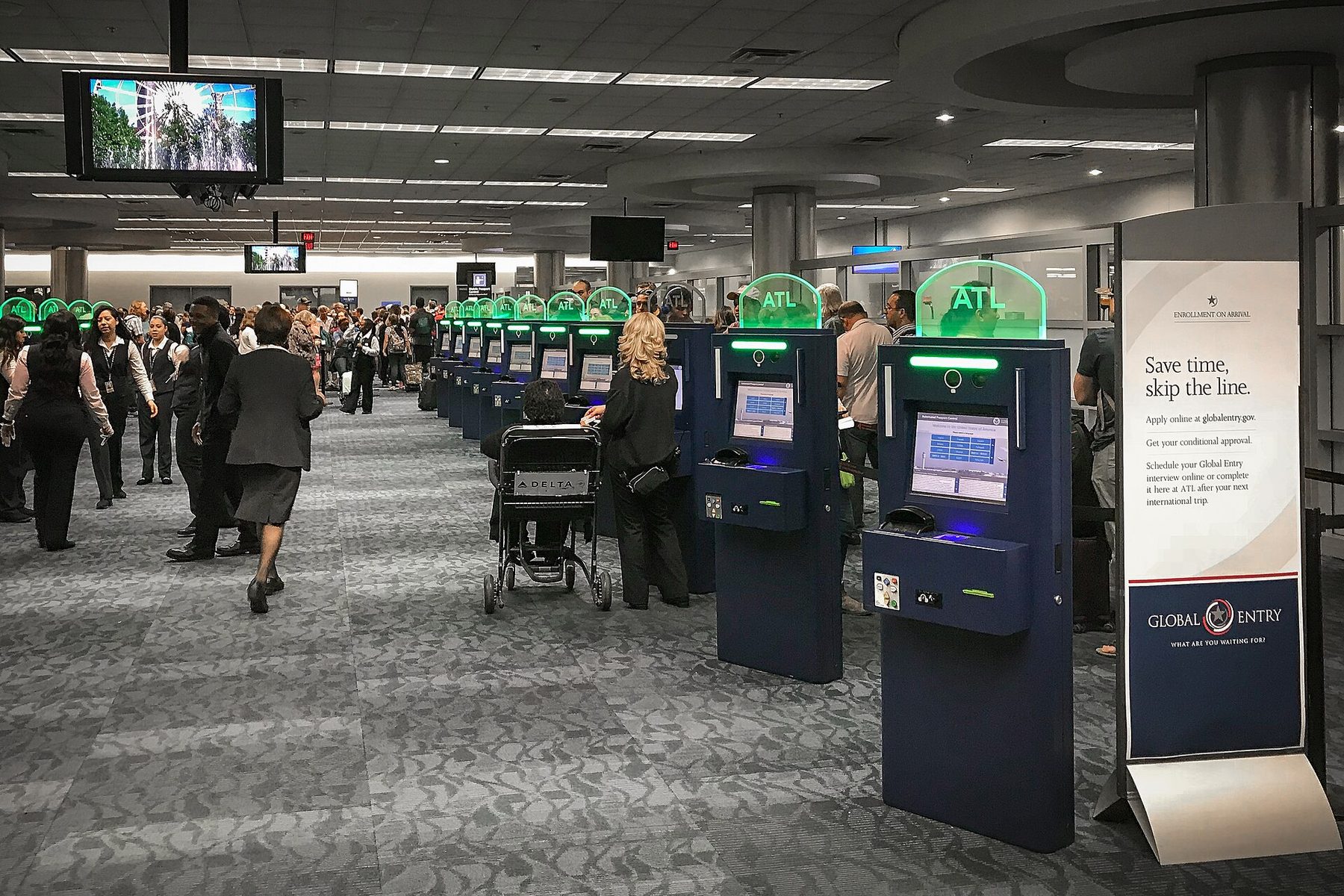
TSA PreCheck works on a different model. TSA lets each of its three authorized enrollment providers set its own enrollment and renewal price, while the vetting fee paid to TSA stays the same across all of them. 11 Amex's page cites up to $85 for a five-year PreCheck membership; check the provider's own price on the day you enroll. 4
| Card | Credit cap, USD | Cycle | Against the 120 Global Entry fee |
|---|---|---|---|
| Chase Sapphire Preferred | 120 | Every 4 years | Covered in full |
| Chase Sapphire Reserve | 120 | Every 4 years | Covered in full |
| Capital One Venture | 120 | Every 4 years | Covered in full |
| Amex Platinum | 120 | Every 4 years | Covered in full |
| Bank of America Premium Rewards | 100 | Every 4 years | Leaves 20 to pay |
The government fee is $120 for a five-year Global Entry membership, per US Customs and Border Protection on 28 September 2026. Amex offers a TSA PreCheck alternative of up to $85 for a five-year membership. 6, 4
What does a card with no annual fee give you?
Every fee card is competing with a free one, and the free ones are good. Citi Double Cash pays 1% when you buy and another 1% as you pay, uncapped, with an extra 3% on hotels, car rentals and attractions booked through the Citi Travel portal. Discover it Miles pays 1.5x miles on every purchase with no earning limit. Both charge $0 a year. 7, 8
- The fee card has to win on the gap, not the brochure. Put its rewards and leftover credits against a flat 2% on the same spending, and keep whichever number is larger. 7
- Portal value is the only point value Chase publishes. Ultimate Rewards points are worth $0.01 each through Chase Travel, and up to $0.015 on Sapphire Preferred or $0.02 on Sapphire Reserve with a Points Boost promotion. 5
- Transfer partners carry no published rate. Neither Chase nor American Express prints a fixed cash value for points moved to an airline or hotel program, so any figure you see for those is somebody's estimate. The credit card points hub and the airline loyalty pages cover what those transfers actually buy.
- Status thresholds belong to a different budget. Sapphire Reserve grants World of Hyatt Explorist status after $75,000 of spending in a calendar year, well above what most households put on one card. 5
A $0 card also removes the deadline. There is no month when a fee lands and you have to justify the past year. For someone who takes one trip a year and books direct with hotels, that is often the whole answer. 8
If you carry a balance, the fee is the small number
All of this arithmetic assumes the statement gets paid in full every month. Once a balance rolls over, interest runs the show. The Consumer Financial Protection Bureau explains that issuers using a daily periodic rate divide the card's APR by 360 or 365, apply it to the amount owed at the end of each day, and add that interest to the next day's balance, so it compounds daily. 12
The fee is the one cost you can decide about in advance. Put a reminder in the month it posts, run the worksheet above, and make the call with last year's statements in front of you. The credit card points hub picks up the next question: what the points are worth once you have them.
Frequently asked questions
Which travel card pays for itself with the least effort?
Citi Strata Premier and Chase Sapphire Preferred, on one hotel booking each. Strata Premier's $95 fee is covered by $100 off a single stay of $500 or more, booked through Citi Travel once a calendar year. Sapphire Preferred's $100 Chase Travel hotel credit covers its $95 with $5 to spare, before its Global Entry credit is counted at all. 3, 1
Does the sign-up bonus count toward the break-even?
No, and the difference shows up fastest in year one. At Chase's own $0.01-a-point Chase Travel value, Sapphire Preferred's 75,000-point bonus is worth about $750, nearly eight times its $95 fee. Sapphire Reserve's 100,000-point bonus values at about $1,000 against a $795 fee, only $205 of room. Neither number says anything about year two, when the bonus is gone and only the recurring credits are left to answer for the fee. 1, 5
What is an Amex Platinum worth if I skip the monthly credits?
The $895 fee minus the $600 hotel credit and the $219 CLEAR+ credit leaves $76 to find. Drop the hotel credit too and the card costs $676 a year before a single point. The Uber lines are worth $200 a year and ask for twelve separate months of attention. 4
Is Chase's $869 lounge value a real price?
It is Chase's own calculation: a $469 annual value for Priority Pass Select membership plus four $100 Chase Sapphire Lounge day passes, which adds to $869. That $469 stands as Chase's figure alone. Counted in full it would swing the Reserve from $465 owed to $404 ahead, which asks for a lot of lounge visits. 5
Can I count a credit I have to activate?
Count it after you activate it. Sapphire Reserve's StubHub and Peloton credits both require activation, and its Lyft credit expires month by month with no rollover. A credit that needs a click on a date is worth what you actually claim, which is why step two of the worksheet reads statements instead of brochures. 5
What if I only travel once a year?
Then the $95 tier is the honest place to look, and a $0 card is a fair answer too. One qualifying hotel stay covers a Citi Strata Premier or Chase Sapphire Preferred fee. A $795 or $895 card asks for lounge visits, monthly app spending and portal bookings spread across the whole year. 3, 1, 5, 4
Does a second card on the account change the math?
Yes, by $195 a year on both of the big cards. An additional American Express Platinum card costs $195, and each Chase Sapphire Reserve authorized user costs $195. Companion Platinum cards carry no fee. Add the extra card to the fee side before you count any credits. 4, 5
Do points have a fixed dollar value?
Not until you decide how to spend them. A stack of Ultimate Rewards or Membership Rewards points has no dollar figure on its own; it gets one only at redemption. Through Chase's own portal, the floor is $0.01 a point, higher with a Points Boost promotion. Move the same points to an airline or hotel transfer partner and neither Chase nor American Express prints a fixed rate at all, so the number depends entirely on the redemption you pick. Price a balance at the portal floor if you want a figure you can trust before you redeem. 5
Sources & review date
Researched 2026-09-28. Prepared from primary sources, with a separate independent source review. Numbered notes in the text point to the sources below. Prices, entry rules and schedules change; use the linked authority for your dates.
- 1Chase Sapphire Preferred credit card Chase · Accessed 2026-09-28 · Primary source
- 3Citi Strata Premier card Citi · Accessed 2026-09-28 · Primary source
- 4The Platinum Card from American Express American Express · Accessed 2026-09-28 · Primary source
- 5Chase Sapphire Reserve credit card Chase · Accessed 2026-09-28 · Primary source
- 6Global Entry: application fee and membership length US Customs and Border Protection · Accessed 2026-09-28 · Primary source
- 7Citi Double Cash card Citi · Accessed 2026-09-28 · Primary source
- 8Discover it Miles travel credit card Discover · Accessed 2026-09-28 · Primary source
- 9Capital One Venture Rewards credit card Capital One · Accessed 2026-09-28 · Primary source
- 10Capital One Venture X Rewards credit card Capital One · Accessed 2026-09-28 · Primary source
- 11TSA PreCheck frequently asked questions: enrollment provider pricing Transportation Security Administration · Accessed 2026-09-28 · Primary source
- 12What is a daily periodic rate on a credit card? Consumer Financial Protection Bureau · Accessed 2026-09-28 · Primary source
- 13What is the difference between a fixed APR and a variable APR? Consumer Financial Protection Bureau · Accessed 2026-09-28 · Primary source