Canada travel guide
Four regional trips, real transport prices and a clear first arrival, so you can choose one part of Canada and give it time.
- Choose one regional route for roughly ten nights; use extra time for full days in your favourite bases.
- Book the access that matters most before fixing the rest: lake transport, intercity trains or the ferry crossing.
- Compare full room and transport totals in CAD, with taxes and mandatory charges visible.
- Check entry for each passport and travel mode using the official Canadian checker. 1
Give Canada ten nights and choose a trip you can settle into: three eastern cities linked by rail, a mountain route with a full day for the lakes, Vancouver and Victoria with a ferry crossing, or Halifax followed by Cape Breton. This guide helps you pick the region, find useful places to stay and put the first journey in order.
Start with the route that makes you want to leave. Then use the dated fares, copyable night plans and arrival steps below to turn it into a holiday. The night allocations are MMT planning recommendations; adjust them to your flights and the time you want in each place.
The essentials, at a glance.
- Money
- CAD, Canadian dollars; provincial tax and purchase type affect totals. 2
- Suggested length
- About ten nights in one region; MMT planning recommendation.
- Eastern rail
- Toronto-Montreal average 5 hours 13 minutes on VIA. 3
- Pearson arrival
- Standard adult Pearson-Union one-way CAD 12.35, 24 September 2026. 4
- Vancouver arrival
- Canada Line from YVR Airport to Waterfront; fare depends on zones and time. 5
- Moraine Lake
- Personal vehicles cannot use Moraine Lake Road; plan current transport access. 7
- Emergency
- 911; ask for an ambulance for a medical emergency. 8
- Health cover
- Visitors pay for hospital and medical services; arrange insurance. 9
- Outdoor conditions
- Check local AQHI, warnings and route access before outdoor days. 10
Which part of Canada should you visit first?
Choose the days you want before choosing the airports. For a first visit, MMT recommends one region and roughly ten nights. Start with the eastern cities if changing hotels by train appeals. Pick the Rockies for a trip shaped around mountain days. Choose Vancouver and Victoria for two city bases with a ferry between them, or Nova Scotia for a road trip with several coastal stops.
Use your least flexible wish to break a tie. If the trip depends on seeing Moraine Lake, build around lake transport and nearby nights. If the train journey is part of the pleasure, begin with Toronto and Montreal. If you want several days with the same room key, the Vancouver and Victoria plan is a good starting point. These are itinerary choices, not ranked attractions.
| Route | Nights | Suggested travel mode |
|---|---|---|
| Eastern cities | 10 | VIA Rail between cities |
| Rockies | 9, plus departure positioning if needed | Car for the full route |
| Vancouver and Victoria | 9 | Transit, ferry and ground transfers |
| Nova Scotia and Cape Breton | 10 | Car outside Halifax |
Night counts and mode choices are MMT planning recommendations. Route details and sources follow below.
Put arrival and departure on the calendar before filling the middle. A nine-night route ending in Jasper needs a plan for reaching your departure airport; a ferry return needs a place to sleep afterward. Keep these nights visible. A buffer becomes useful only when it has a location, a room and a job to do.
For a week, choose two bases. With two weeks, add time to the same region: another full day in Montreal, a spare mountain day, or a longer stop around the harbour. Resist adding a flight just to make the map look complete. You can spend the extra day doing something you chose to cross an ocean for.
If Canada is one of several countries under consideration, compare complete routes. Put this eastern rail plan beside the France travel guide and compare hotel changes, station transfers and the number of full days left after travel. That gives you a useful choice before you begin comparing airfares.
Toronto, Montreal and Quebec City by rail
Make the stations your first lodging anchors. Search near Union Station in Toronto and around Bonaventure in Montreal. Montreal Central Station is at 895 de la Gauchetière West, beneath the Queen Elizabeth Hotel, near Bonaventure and McGill Metro. Keep the precise station address with your ticket. 11, 4
In Quebec City, compare Old Quebec, Saint-Jean-Baptiste and Saint-Roch. Old Quebec puts the streets inside the walls and Petit-Champlain on your shortlist; Saint-Roch offers restaurants and venues along Rue Saint-Joseph Est in Lower Town. Choose which area you want for evenings, then check the actual route from the station to each room. 12
VIA lists Toronto to Montreal at an average of 5 hours 13 minutes. Treat it as the main event of a transfer day. Its displayed fares depend on the date and exclude sales tax; use the train you will take when comparing costs. The Montreal-Quebec corridor is a separate booking decision. 3, 13
- 01
- 02Montreal3 nights
Make Jean-Talon Market at 7070 Henri-Julien Avenue one food-focused outing. Its produce stalls, butchers and fishmongers give you a place to browse before choosing lunch. Leave another full day for your main city interest. 15
→ VIA Rail toward Quebec City; confirm the station and connection on your chosen service. 13 - 03Quebec City3 nights
Use the first evening near your lodging, then give Old Quebec and a second neighbourhood their own time. Let the last full day stay flexible.
→ Quebec City station: 450 rue de la Gare du Palais. 16 - 04Departure city1 night
Place the last night in the city your flight actually leaves from. If you fly from Toronto, use this day for the return journey, with a separate onward reservation.
→ Book the required train or airport transfer after comparing the whole route.
With less time: With seven nights, choose Toronto and Montreal, or Montreal and Quebec City. Put the saved transfer day into the place you most want to explore.
Before buying rail tickets, decide how much change you can absorb. VIA Corridor Escape fares are non-refundable and non-exchangeable. Economy changes and refunds carry a fee of 25%, with a minimum of CAD 20 per segment; exchanges also require any fare difference. Compare baggage and seat-selection terms with the fare, too. 17
A cheap departure can be the wrong choice if it forces an extra hotel night at the far end. Write the departure time, arrival time and final room cost on the same line. For a group, compare the total for everyone with their actual bags. Reserve seats and any needed assistance as part of the same planning session.
Give food time without making every meal an appointment. In Quebec City, use Rue Saint-Joseph Est as one possible evening focus, then leave the next meal near that day's walk. A fixed restaurant across town can turn an easy afternoon into a timetable. Choose one meal you care about and leave the others room to happen. 12
The Rockies: plan the lake day first
Calgary is the starting gateway. Its airport has shuttle and transfer links to Banff and Lake Louise. For the full route below, compare a rental car with your flight plan; for a shorter stay, price a Banff base with booked transport. The two towns sit along the Trans-Canada Highway. 18
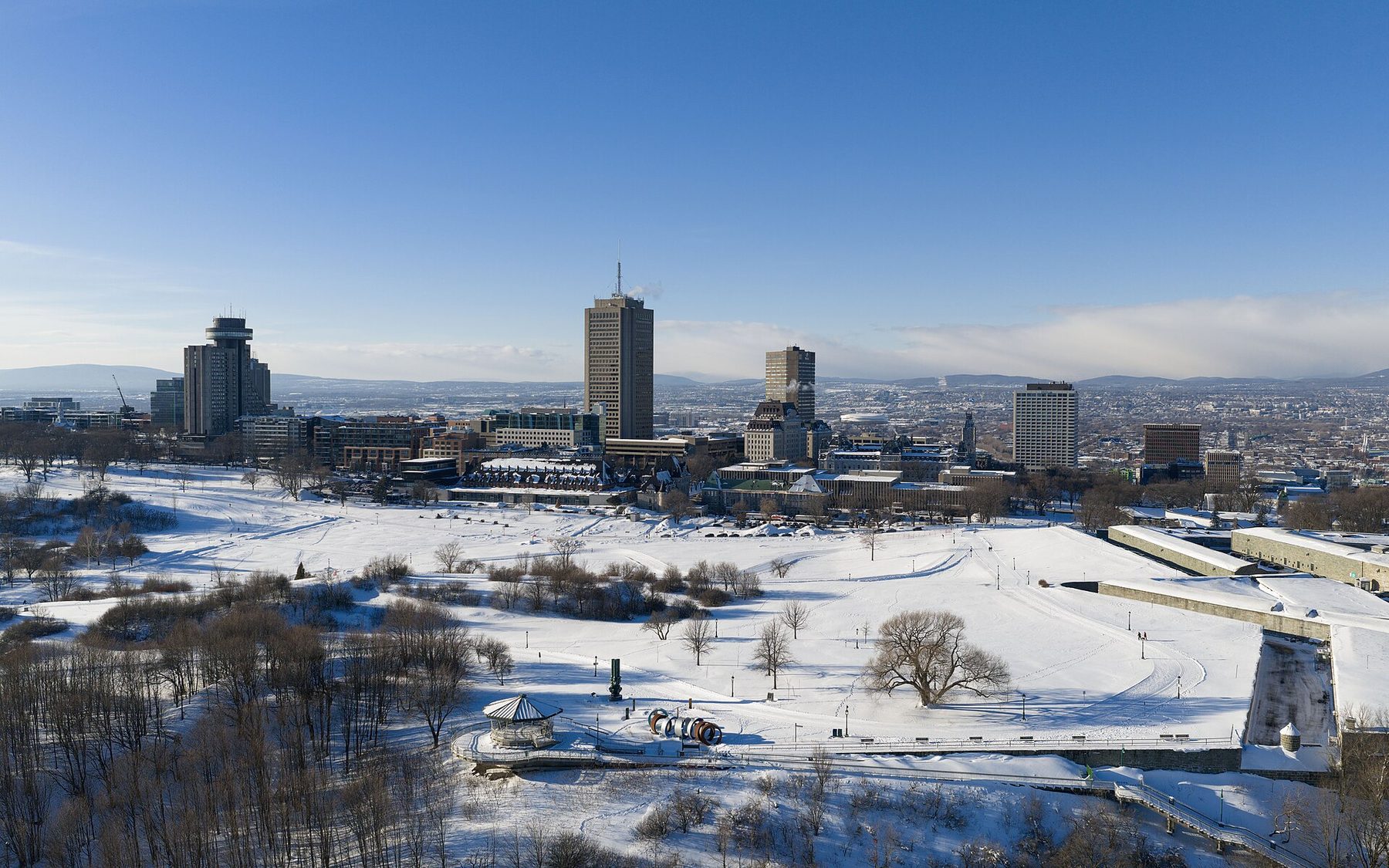
Begin your room search in Banff town and Lake Louise, then Jasper for the northern end. MMT's allocation gives the lake area two nights so its main visit falls between check-in and checkout. Choose a room for the departure you need to reach, not simply the name on a map. Record the pickup or parking address beside the booking.
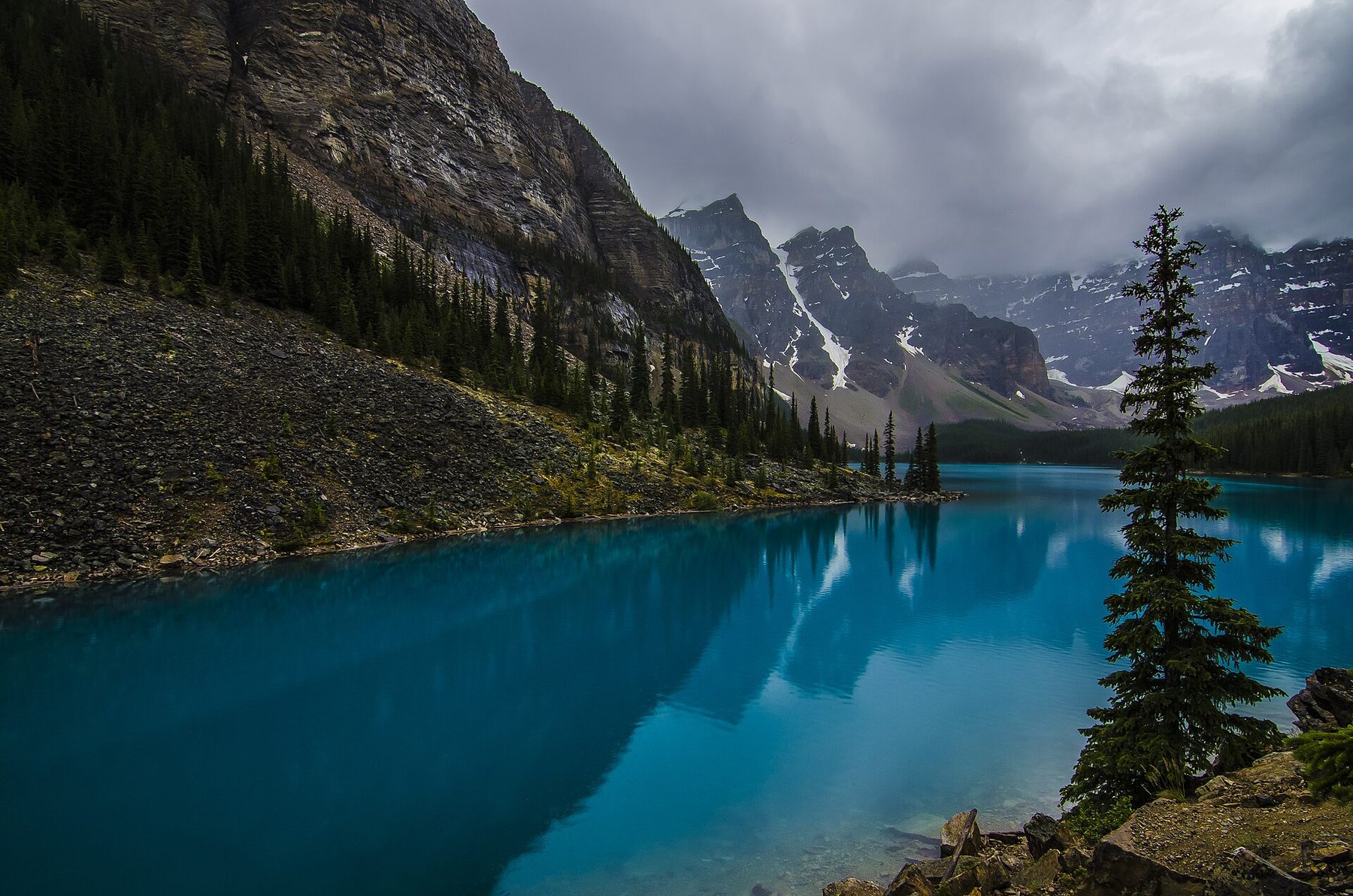
Moraine Lake Road is closed to personal vehicles year-round. The lake has other access arrangements: use Parks Canada's current lake transport guidance to choose one. Settle that journey before promising yourself a particular morning at the lake. 7
Regular Parks Canada shuttle reservations include both lakes, the Lake Connector and the return to Lake Louise Park and Ride. Check in there during your departure window; its address is 1 Whitehorn Road. The Alpine Start service has a different departure point. At Moraine Lake, expect no cell service or running water, and bring what you need. 19
- 01Calgary1 night
Sleep after arrival and collect supplies before the mountain portion. This is a practical arrival night; add a city day if Calgary itself is part of your wish list.
→ Arrange the road journey or booked transfer toward Banff. 18 - 02Banff3 nights
Use one full day for the outing you most want and keep another available for a shorter walk or a change of plan. Avoid booking every morning before seeing the forecast.
→ Continue to Lake Louise; match checkout to the next room or transport booking. - 03Lake Louise2 nights
Keep your booked lake outing on the full day between nights. Pack for it the evening before so the departure window stays easy to meet.
→ Drive the Icefields Parkway toward Jasper, subject to current access. 20 - 04Jasper3 nights
Consider Lake Annette and Maligne Lake, whose trailheads Parks Canada lists open on 24 September 2026. Maligne Canyon trailhead is listed closed. Check the current status table before choosing the outings for these three nights. 21
→ Arrange departure positioning separately; add a night when your flight schedule requires it.
With less time: With less time, keep Calgary, Banff and Lake Louise and save Jasper for another trip. Preserve the full lake day instead of compressing every stop.
The Icefields Parkway runs 232 kilometres between Lake Louise and Jasper on Highway 93. Give that drive a day on your calendar, with stops chosen after checking conditions. Its distance is a route fact; the time you give it is a choice. Keep a demanding hike off the same day's plan. 20
Work backward from your final flight before committing to the car. Compare pickup and return locations, every driver, the insurance terms and the full price for your dates. Ask for the one-way charge where relevant. If returning to Calgary, put the return drive into the calendar now. The nine nights above leave that decision open on purpose.
For a town-based walk, consider Bow Falls Trail along the south bank of the Bow River. It passes rapids and climbs above the falls; the clifftop section closes in winter. Check the trail conditions, then decide whether it suits the group that day. Keep a shorter option available. 22
Vancouver and Victoria, with time for the ferry
Start with two city bases. In Vancouver, compare lodging near Waterfront with Yaletown, which sits between False Creek and the downtown core and has seawall access. For Victoria, search the Inner Harbour, downtown and James Bay. The harbour sits between the latter two areas. These are useful starting points for comparing the exact room and daily walk. 23, 24
From YVR, the Canada Line connects the airport with Waterfront Station. Tap in and out on SkyTrain. For the island crossing, plan transport to Tsawwassen, the ferry to Swartz Bay, then ground transport into Victoria. TransLink's visitor planner includes Tsawwassen links; Victoria's tourism office describes public transit from Swartz Bay to downtown. 5, 24
Use the city days to learn from contemporary hosts. Vancouver is on the territories of the Musqueam, Squamish and Tsleil-Waututh Peoples. Indigenous Tourism BC offers an Indigenous-led starting point for choosing urban experiences. Follow through to the operator's own booking information for your dates. 25
- 01
- 02Victoria3 nights
Use the first evening around the harbour and give the next two days separate interests. Keep meals near those plans instead of turning each day into a chain of pickups.
→ Book the return crossing and both ground legs if flying from Vancouver. - 03Victoria and Vancouver buffer2 nights
Allocate one extra night to Victoria and the final night to Vancouver before a mainland flight. If departing from Victoria, keep both nights on that side and remove the return crossing.
→ Choose actual hotels for these nights before buying transport.
With less time: With six nights, use three in each city and arrange departure from the side where you finish. With fewer nights, stay in Vancouver and keep the island for another visit.
Decide about the car before deciding about the ferry fare. If your island plan is Victoria, compare foot-passenger travel plus the ground links with taking a vehicle. If you want to drive farther on the island, first locate the extra nights and price the vehicle for those dates. Renting for the whole holiday deserves a full cost comparison.
The Tsawwassen-Swartz Bay at-terminal base is CAD 21 per passenger aged 12 or over, plus CAD 89 per standard vehicle up to 20 feet long. Vehicle fare excludes occupants and a booking. Compare the dated components below with your chosen prepaid or reserved product. 26
Give the ferry day a small finish. Plan dinner near the next room and leave the big excursion for tomorrow. Check-in deadlines, the drive or bus to the terminal, and the final trip into town all need space. Save the terminal names offline; Vancouver and Victoria are the city names, while your ticket names the ports.
Keep Haida Gwaii outside this itinerary. Give it a separate planning file and choose its access, hosts and nights together. Moving two spare island nights there would undo the breathing room built into this route.
Halifax and Cape Breton at a slower pace
Use downtown Halifax as the first base. Start near the waterfront, then plan a separate walk around Spring Garden Road, the Public Gardens and Central Library. Tourism Nova Scotia also points visitors to the Canadian Museum of Immigration at Pier 21. Pick the stop that interests you most and give it enough time. 27
For Cape Breton, Tourism Nova Scotia's Cabot Trail itinerary names Baddeck, Ingonish, Cape North and Chéticamp and allows four to five days. Summer into early fall is its full-services window. Use those communities to build your room search, then choose the direction and overnight stops from actual availability. 28
MMT's ten-night version gives Halifax three nights, the Cape Breton portion five, and the journeys in and out two nights. Those last two nights belong in booked rooms, not in a margin on the map. The example below places one in Baddeck and the final one in Halifax. Move them only after the flight and driving plan work together.
- 01Halifax3 nights
Rest on arrival, spend a full day around the city and leave another for the museum or walk you most want. Collect the car when the road portion begins.
→ Set aside a travel day toward Baddeck. - 02Baddeck1 night
Use this as the outward transfer night. Arrive, eat and prepare for the next part without attaching a long sightseeing list to the drive.
→ Continue toward Ingonish after checking your chosen stops and road conditions. - 03Ingonish2 nights
Keep a full day between packing days. Choose an outing suited to the forecast and leave time for a meal without another drive afterward.
→ Continue around the northern part of the route, using Cape North as a planning waypoint. 28 - 04Chéticamp3 nights
Use two full days for the western portion at your own pace. Keep one lightly booked so poor weather shifts an outing instead of forcing a rushed attempt.
→ Return toward Halifax with a full travel day available. - 05Halifax1 night
Sleep here before departure. Make the last evening easy and return the car at a time that fits the booked flight.
→ Confirm the car-return location and onward airport plan.
With less time: With seven nights, reduce Halifax by one night and choose one Cape Breton base for a shorter visit. Keep the outward and return travel days visible.
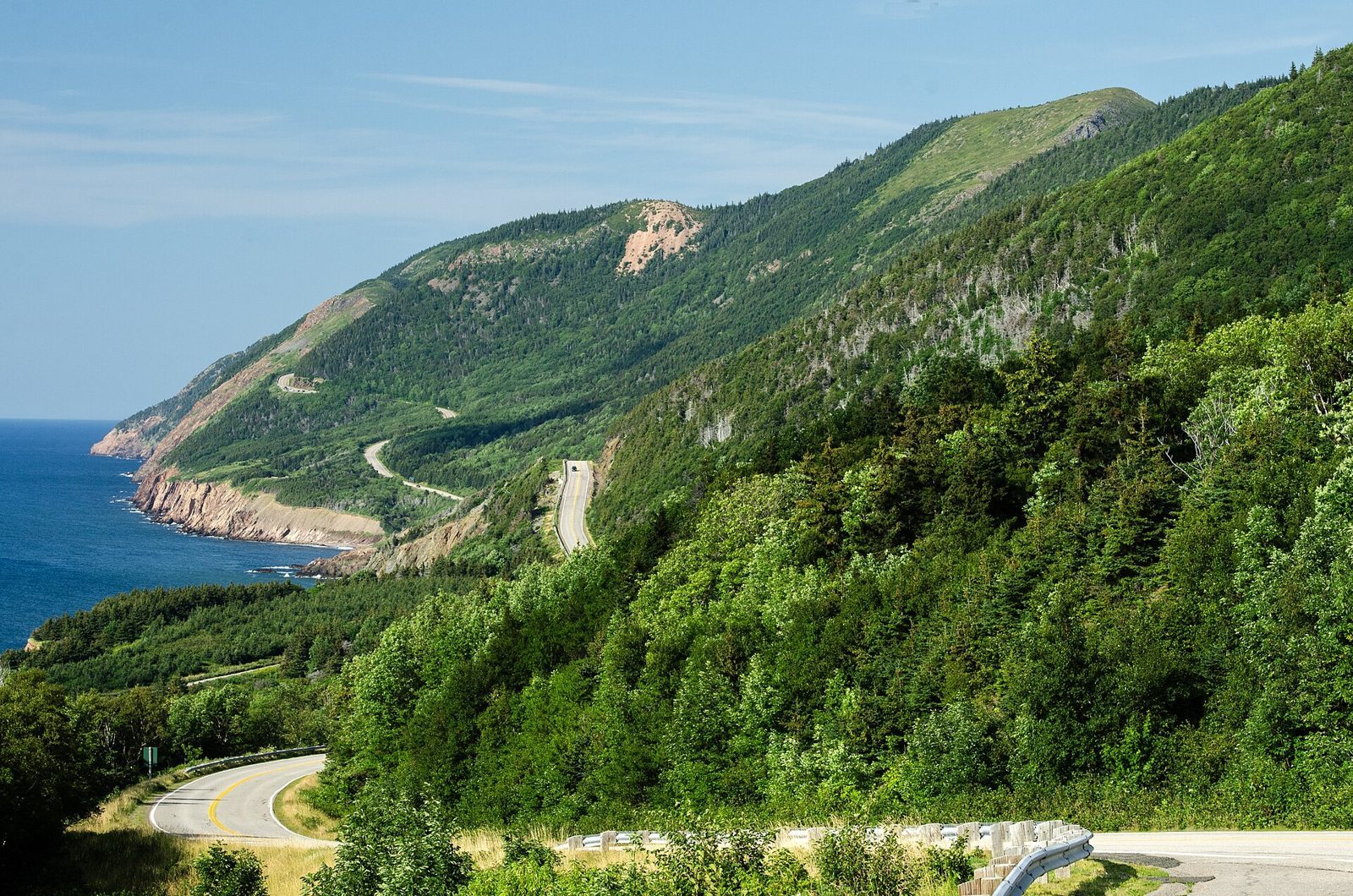
Plan the day's food before leaving a community. The provincial itinerary warns about seasonal services, quick weather changes and longer gaps between fuel stops. Refuel and buy what you need before a drive with several planned stops. Keep dinner close to your overnight base so the final leg stays short. 28
In Halifax, a donair is one locally named food to try; the tourism office calls it the city's official snack. Choose a day when you can eat near the waterfront or your walking route. A meal can be part of exploring the city without turning into another reservation. 27
Before adding a second province, write down what you would remove from these ten nights. If the answer is the spare Cape Breton day or the final Halifax night, decide whether that trade is worth it. A longer destination list gives you less chance to return to somewhere you liked yesterday.
Your first arrival: Pearson to a Toronto base
Save the room address and the route before boarding. For the eastern itinerary, Toronto Pearson and Union Station provide a clear starting pair. Keep the first day's commitments small: reach the city, leave your bags through an arrangement confirmed with the accommodation, eat nearby and rest. Book the first intercity train for a later day.
Complete the border process
Have the travel document and required authorization ready. Follow the airport process for declarations and border checks. ArriveCAN Advance Declaration is optional at supported airports, available up to 72 hours ahead, and separate from permission to travel. 29
Find Terminal 1 for the train
After the arrival formalities, follow Train to City signs. The UP Express platform is in Terminal 1. From Terminal 3, take the free Terminal Link Train to Terminal 1 and follow the signs onward. 30
Buy the ticket for Union
The published standard one-way Pearson-Union fare is CAD 12.35 for ages 13-64, checked 24 September 2026. Choose the ticket for those endpoints and keep it available during travel. Local travel beyond Union is separate. 4
Finish the trip to the room
Match the station exit and onward journey to your saved address. If using TTC, its adult contactless or PRESTO fare is CAD 3.30. Use the same payment method for the included two-hour TTC transfer. 31
Prepare one thing for tomorrow
Check the next morning’s starting point, then stop planning. Put the train ticket, hotel address and any booking you need in one offline folder. Keep a paper copy of the address if your phone is your only map.
For a late landing, compare the scheduled last train with the time needed after arrival. Choose a fallback before departure: a booked ground transfer or an airport-area room with a confirmed transfer arrangement. A published train time starts at the platform; leave room to reach it. Put the fallback cost in your own worksheet.
For Vancouver, save YVR Airport and Waterfront Station in your notes, then use the Canada Line. The airport fare has a zone component and an AddFare, both explained below. For the Rockies, save the Calgary pickup details and first room address. In each case, end the first day at a base you can reach without a tightly timed excursion. 5, 18
How much do the transport basics cost?
Price the trip from the bookings you will use. All amounts below are Canadian dollars, checked on 24 September 2026. These are individual published inputs. Build your total from dated room and transport quotes, then add the activities you choose. Keep per-person amounts separate from per-vehicle and per-booking charges.
| Item and eligibility | CAD | Scope |
|---|---|---|
| Pearson to Toronto Union, standard one-way, age 13-64 | 12.35 | UP Express only; onward local transfer separate |
| TTC adult, PRESTO/debit/credit | 3.30 | Published fare; two-hour TTC transfer with same payment method |
| YVR Airport to Waterfront, age 19-64, in one-zone fare periods | 10.00 | Contactless 3.50 + 6.50 AddFare; after 6:30 p.m. weekdays, weekends or provincial statutory holidays; exemptions apply |
| Tsawwassen-Swartz Bay passenger, age 12+ | 21.00 | One-way at-terminal base |
| Same ferry, standard vehicle up to 20 feet | 89.00 | Occupants excluded; booking not included |
| Same ferry, one passenger + standard vehicle | 110.00 | Arithmetic on those two base fares |
| Public Mobile Canada-wide monthly plan | 30.00 | 35 GB at 4G speed; unlimited talk/text; before applicable tax |
Transit figures are published fares, not pre-tax estimates. Ferry bases exclude reservation/product differences, possible taxes or surcharges and onward travel. Phone price excludes tax. No currency conversion is used; confirm final checkout totals.
For Vancouver, CAD 10 is a one-zone example, not a flat airport fare. Adult contactless is CAD 3.50 for one zone or CAD 5.10 for two. Trips starting after 6:30 p.m. on weekdays, on weekends and on provincial statutory holidays use the one-zone fare. The adult category is ages 19-64. 32
Add CAD 6.50 to qualifying journeys starting at YVR and ending at Bridgeport or beyond. Ordinary contactless trips incur it. Monthly passes and DayPasses bought off Sea Island are among the exemptions; travel toward the airport has no airport AddFare. Use the TransLink fare checker for your departure time and destination. 33
Sales tax depends on province and what is being sold. The federal table lists Alberta's GST at 5%, Ontario's HST at 13% and Nova Scotia's HST at 14%. British Columbia lists 5% GST plus 7% PST; Quebec lists 5% GST plus 9.975% provincial tax. Apply the correct tax treatment to each purchase, not one blanket uplift to every fare. 2
- Rooms: compare the same dates, occupancy, room type, cancellation terms, taxes and mandatory charges. Add parking only if you will use it.
- Transport: total the rail segments or car contract, then terminal transfers, ferry occupants, fuel and any one-way return charge.
- Daily spending: choose meals and activities you actually want, keep their prices in CAD, and leave an amount you can afford uncommitted.
Before paying, compare the complete eastern rail trip with the complete driving trip. The cheaper flight alone settles very little. For another rail-based planning exercise, use the United Kingdom travel guide to compare the number of bases and booking commitments you prefer.
When does the Discovery Pass pay off?
Count paid admission days. At Banff's published adult rate, six daily admissions total CAD 73.50 and seven total CAD 85.75. The adult Discovery Pass is CAD 83.50. It becomes cheaper at the seventh admission in this illustration, for ages 18-64. Other Parks Canada sites can have different daily rates. 35
The Discovery Pass covers admission at more than 80 Parks Canada destinations for 12 months. Regular fees resumed on 8 September 2026 after the temporary Canada Strong Pass period. Count the dates and sites on your trip, then compare the relevant pass category. Services and reservations remain separate costs. 36
Table view: Adult admission: six days, seven days or a pass
| Item | Value (CAD) |
|---|---|
| Six daily admissions | 73.50 CAD |
| Seven daily admissions | 85.75 CAD |
| Adult Discovery Pass | 83.50 CAD |
Published admission amounts checked 24 September 2026. Arithmetic is admission-only; camping, shuttles, parking, reservations and attractions are excluded. Source: 35, 36
| Option | CAD |
|---|---|
| Six adult daily admissions at Banff | 73.50 |
| Seven adult daily admissions at Banff | 85.75 |
| Adult Discovery Pass | 83.50 |
Same adult category and admission-only scope as the chart; published amounts, with no currency conversion or added services.
Do the comparison after the route is settled. Buying a pass first can tempt you to add a park merely to justify it. Keep the lake transport reservation, campsite or hotel, and admission pass as separate lines in your plan. Each line solves a different part of the day.
For a family, begin again with the right categories. Banff admission is free for ages 17 and under; its family/group category covers up to seven people arriving in one vehicle. That changes the calculation. Avoid multiplying the adult example by everyone in the car. 35
When is the best time for your route?
Choose a season for the experience you want. A city visit built around meals and indoor stops gives you different choices from a holiday built around mountain access. Start with the activity you would be most disappointed to lose. Check its operating dates before choosing the week, then keep a second kind of day available.
For the Cabot Trail, use summer to early fall as the starting window for a trip needing full services. Outside that window, confirm each overnight stop and meal option before joining them into a loop. A room booking alone leaves the rest of the day unresolved. 28
Mountain winter travel needs its own plan. Parks Canada avalanche closure zones in Banff, Yoho and Kootenay operate from November to May, with closures as required for control work. Check current road and area notices before each transfer. Seasonal control zones do not mean every mountain route is closed throughout those months. 37
Canada's wildfire season typically runs from early April to late October. Use that as planning context, then check the Air Quality Health Index and current warnings for the places you will visit. Smoke can travel far from a fire. The season dates alone say little about a particular day's outing. 10
- Eastern cities: pair each outdoor day with an indoor choice nearby, and keep the rail departure day lightly booked.
- Rockies: protect the booked lake day, then use flexible days around it for conditions and rest. Recheck the onward road before checkout.
- Pacific route: separate the ferry return from the long-haul flight and use the final mainland night for a calm departure.
- Atlantic route: settle meals, fuel and open services for the next leg while still in the current community.
If your travel dates are fixed, choose the route that works within them. Start with what is open, then compare rooms and transport. A less crowded calendar is only useful when the trip you want is operating. For a special excursion, place its cancellation deadline next to the accommodation deadline so you can still change both together.
Pack for the actual days on your calendar. A road day, a city walk and a lake shuttle outing need different bags. Make a short list for each before departure, then keep the items for tomorrow ready tonight. Leave space to carry back the layers you remove during the day.
Do you need a visa or an eTA?
Start with your citizenship, document and arrival mode. Use the official Canada entry checker for each traveller. Many visa-exempt foreign visitors need an eTA when flying, while visa-required travellers need a visa by land or sea as well. Some nationalities have conditional eligibility for an eTA by air. 1
| Traveller | Starting requirement | Official fee shown, CAD |
|---|---|---|
| Eligible eTA traveller flying to Canada | Passport-linked eTA | 7, non-refundable |
| Visa-exempt traveller entering by land or sea | Valid passport; generally no eTA | No eTA fee |
| Visa-required traveller | Visitor visa for the applicable journey | Check the official application |
| US citizen using a valid US passport | No Canadian visa or eTA required | No visa/eTA fee |
Use the checker for exceptions, dual citizenship and residence status. This table covers visitor travel, not permission to work.
Apply through the official government site if the checker directs you to an eTA. Have your eligible passport, email address and accepted payment method ready. The official fee is CAD 7 per applicant, non-refundable, checked 24 September 2026. Keep the passport used in the application with the travel booking. 6
Most visitors can stay for up to six months, but the border officer can set a shorter or longer period. Your entry document or authorized date controls; passport or biometrics expiry can shorten the period. Read any date given to you before planning a longer stay. 39
A visitor visa or eTA gives no right to employment in Canada. Most foreign nationals need a work permit unless an exemption applies to their activity. If work forms part of your plan, resolve the specific activity with IRCC before arranging a working stay. 40
Check the whole flight path as well as Canada. If your journey includes the United States, use the United States travel guide to begin checking that separate leg. Keep the itinerary in front of you while checking documents so an outbound connection and a different return connection both get attention.
For a group, create one row per traveller with the passport being used, application status and any follow-up date. Keep copies securely and make sure each person can access their own documents. Resolve the least flexible document issue before paying for reservations that you would be unable to use.
Indigenous hosts and a separate Haida Gwaii trip
Choose experiences through the people who host them. The Indigenous Tourism Association of Canada represents Indigenous-owned and controlled tourism businesses across every province and territory. Use its Indigenous tourism directory to start a search, then read how the named business describes its experience. First Nations, Inuit and Métis peoples have distinct communities and traditions. 41
Put the host's schedule into the route early. If there is one experience you care about, choose the available departure first and arrange nearby nights around it. Read who leads the visit, where you meet, how long it lasts and what is included. Give the experience a full place in the day instead of fitting it between checkout and a distant dinner.
Follow the host's instructions for photography and access. Ask before recording a person or a presentation. When buying work, ask for the artist's name and the material or process if you want to understand it better. Leave enough time for an answer, and accept a boundary without turning it into a negotiation.
Go Haida Gwaii asks visitors to take the Haida Gwaii Pledge before arrival, book ahead, keep vehicles off beaches and allow for weather cancellations. Begin with its trip-planning guidance, which centres Haida visitor protocols and the Council of the Haida Nation. Treat Haida Gwaii as a separate advance-planning trip. 42
- First choose the host or purpose of the visit and the dates that work for that experience.
- Next match inbound transport, nights and local travel, keeping space for disruption before the next major commitment.
- Then read the current visitor protocol with everyone travelling, including the person responsible for the rental vehicle.
Gwaii Haanas has no road access. A visit needs its own licensed-operator or self-guided arrangements under the current rules. Decide that part before purchasing a larger Haida Gwaii itinerary, so the trip's central experience has a workable means of access. 42
Keep this planning distinct from the Vancouver Island itinerary above. A spare pair of nights is best used to deepen the route already booked. For Haida Gwaii, start again with the hosts and transport, then give the resulting plan the time it needs.
Health, phones and the details that make a day work
Arrange health cover before departure. Canada does not pay visitors' hospital or medical bills. Read a policy against your actual activities and health needs, including any exclusion that matters to you. Keep the assistance contact and policy number where a travelling companion can find them. 9
Dial 911 for an emergency and ask for an ambulance when you need medical help. If referred for treatment, contact your insurer or assistance company promptly. Save the address of your accommodation and share the day's destination with your group. 8
For mobile service, Public Mobile lists a Canada-wide monthly plan at CAD 30 before tax, with 35 GB at 4G speed and unlimited talk and text, checked 24 September 2026. It supports app activation and eSIM. Confirm your device, payment and activation requirements before buying, and check the subscription's renewal arrangements. 34
Keep essential documents usable without mobile data. Download rail tickets, ferry confirmations and the next room's arrival instructions. Save a map of the route from the station or terminal, plus the address in plain text. If two people are travelling, put copies on both phones so one flat battery stays a small problem.
- For access needs, map the journey from the room door to the platform or pickup. Confirm the actual entrance, lift, bathroom and boarding arrangement for each booked service.
- For food needs, keep a short written description of what you need to avoid and discuss it directly with the kitchen. Carry a suitable fallback for transfer days.
- For a road trip, share driving expectations before booking. Agree who drives, how often to stop and which late arrival would trigger an overnight change.
VIA asks for at least 48 hours' notice for curbside assistance at Quebec City station. Use its station page when arranging that help and explain the assistance needed. Carry the confirmation with the ticket so the request remains easy to identify on travel day. 16
Give each booking one place in your notes: date, local time, address, what is paid, what remains due and the cancellation deadline. Include the room's check-in instructions and transport booking reference. This small record is most useful when you are tired, offline or changing plans, so keep the wording short enough to read at a glance.
The evening before a transfer, settle three practical points: the first meal, the first departure and where the bags will go on arrival. Then leave the rest of the evening free. The trip should have room for an extra walk, a conversation or simply staying at the table a little longer.
Canada travel questions, answered.
Find the practical detail you need, or browse by topic.
How should I use fourteen nights in the Rockies?
Keep the nine-night core, then allocate the extra five deliberately: one or two to departure positioning, and the remainder to the bases where you want more full days. Decide the flight city first. MMT recommends adding time within this route before adding Vancouver.
Can I book the cheapest VIA fare and change it later?
Corridor Escape fares allow neither exchanges nor refunds. Economy changes or refunds cost 25%, minimum CAD 20 per segment, with any fare difference also payable for an exchange. Compare that risk with a flexible fare before choosing your departure. 17
Does a Discovery Pass reserve a lake shuttle seat?
Does the vehicle fare include the driver?
The Tsawwassen-Swartz Bay standard vehicle fare excludes driver and passengers. Add each person using the correct age category, then check the booking product and any surcharges. Count the return crossing separately if you are returning to the mainland. 26
Do US citizens need to buy an eTA?
US citizens travelling with a valid US passport need neither a Canadian visa nor an eTA. They still need to meet admission requirements. Use the specific rule for the passport and status you hold; citizenship and residence are different details. 38
What if I enter by land and fly back later?
Check the document requirement for each entry into Canada using its actual mode. An eTA requirement concerns flying to Canada, not flying out. If your later flight returns you to Canada, run that arrival through the checker as well. 1
When should I act if I want to extend a visit?
IRCC advises applying at least 30 days before your authorized stay ends. First read the date set at entry and the expiry of your documents. Keep the application timeline separate from any flight change; a new ticket alone changes no immigration status. 39
Should I buy an airport return ticket on arrival in Toronto?
Only if Pearson-Union in both directions fits your plan. The standard adult return is CAD 24.70, twice the one-way fare. An eastern trip ending elsewhere has no use for the second journey. Compare departure airports before buying the return. 4
Where can I get local help after reaching Victoria?
The Victoria Visitor Centre is at 812 Wharf Street, at Wharf and Government beside the Inner Harbour. Save that address before the ferry day. It is a useful starting point for local plans once you have reached the city. 24
No answers match those filters. Try a broader word or choose all topics.
Sources & review.
Researched 2026-09-24. Prepared from primary sources, with a separate independent source review. Numbered notes in the text point to the sources below. Prices, entry rules and schedules change; use the linked authority for your dates.
- 1What you need to enter Canada Immigration, Refugees and Citizenship Canada · Accessed 2026-09-24 · Primary source
- 2GST/HST calculator and rates Canada Revenue Agency · Accessed 2026-09-24 · Primary source
- 3Train from Toronto to Montreal VIA Rail Canada · Accessed 2026-09-24 · Primary source
- 4Tickets and fares Union Pearson Express / Metrolinx · Accessed 2026-09-24 · Primary source
- 5Visiting Vancouver TransLink · Accessed 2026-09-24 · Primary source
- 6Electronic travel authorization: How to apply Immigration, Refugees and Citizenship Canada · Accessed 2026-09-24 · Primary source
- 7Seasonal closures and restrictions - Banff National Park Parks Canada · Accessed 2026-09-24 · Primary source
- 8Canada health advice UK Foreign, Commonwealth and Development Office · Accessed 2026-09-24 · Primary source
- 9If I get sick or have an accident while visiting Canada, will the Government of Canada pay? Immigration, Refugees and Citizenship Canada · Accessed 2026-09-24 · Primary source
- 10Wildfire smoke, air quality and your health Environment and Climate Change Canada / Health Canada · Accessed 2026-09-24 · Primary source
- 11Montréal train station VIA Rail Canada · Accessed 2026-09-24 · Primary source
- 12Guide to Québec City neighbourhoods Destination Québec cité · Accessed 2026-09-24 · Primary source
- 13Ottawa - Montréal - Sainte Foy - Québec schedule VIA Rail Canada · Accessed 2026-09-24 · Primary source
- 14Things to do City of Toronto · Accessed 2026-09-24 · Primary source
- 15Jean-Talon Market Tourisme Montréal · Accessed 2026-09-24 · Primary source
- 16Québec City train station VIA Rail Canada · Accessed 2026-09-24 · Primary source
- 17Fares and conditions VIA Rail Canada · Accessed 2026-09-24 · Primary source
- 18How to get to Banff and Lake Louise Banff & Lake Louise Tourism · Accessed 2026-09-24 · Primary source
- 19Visiting Lake Louise and Moraine Lake Parks Canada · Accessed 2026-09-24 · Primary source
- 20Icefields Parkway Travel Alberta · Accessed 2026-09-24 · Primary source
- 21What is open in Jasper National Park Parks Canada · Accessed 2026-09-24 · Primary source
- 22Bow Falls Trail Town of Banff · Accessed 2026-09-24 · Primary source
- 23Yaletown Destination Vancouver · Accessed 2026-09-24 · Primary source
- 24Inner Harbour Destination Greater Victoria · Accessed 2026-09-24 · Primary source
- 2548 Hours in Vancouver: Urban Indigenous Getaway Indigenous Tourism British Columbia · Accessed 2026-09-24 · Primary source
- 26BC Ferries fare index version 26-04 BC Ferries · Accessed 2026-09-24 · Primary source
- 27Explore Halifax Tourism Nova Scotia · Accessed 2026-09-24 · Primary source
- 28Cabot Trail 4 to 5 Day Road Trip Itinerary Tourism Nova Scotia · Accessed 2026-09-24 · Primary source
- 29Declare your travel information at an airport kiosk or eGate Canada Border Services Agency · Accessed 2026-09-24 · Primary source
- 30Train to city (UP Express) Toronto Pearson / Greater Toronto Airports Authority · Accessed 2026-09-24 · Primary source
- 31Back to school on the TTC Toronto Transit Commission · Accessed 2026-09-24 · Primary source
- 32Pricing and fare zones TransLink · Accessed 2026-09-24 · Primary source
- 33Transferring and AddFare TransLink · Accessed 2026-09-24 · Primary source
- 34Mobile plans Public Mobile · Accessed 2026-09-24 · Primary source
- 35Fees - Banff National Park Parks Canada · Accessed 2026-09-24 · Primary source
- 36Passes, permits and fees Parks Canada · Accessed 2026-09-24 · Primary source
- 37Area closures - Mountain safety Parks Canada · Accessed 2026-09-24 · Primary source
- 38I am an American citizen. What do I need to enter Canada? Immigration, Refugees and Citizenship Canada · Accessed 2026-09-24 · Primary source
- 39How long can I stay in Canada as a visitor? Immigration, Refugees and Citizenship Canada · Accessed 2026-09-24 · Primary source
- 40Understand the consequences of unauthorized work Immigration, Refugees and Citizenship Canada · Accessed 2026-09-24 · Primary source
- 41Indigenous Tourism Association of Canada Indigenous Tourism Association of Canada · Accessed 2026-09-24 · Primary source
- 42Plan your trip Go Haida Gwaii / Haida Gwaii Tourism · Accessed 2026-09-24 · Primary source