Pick one trip, not three
Three days out of Bogotá, with the distance, the entry price and the hours that decide which one you take.
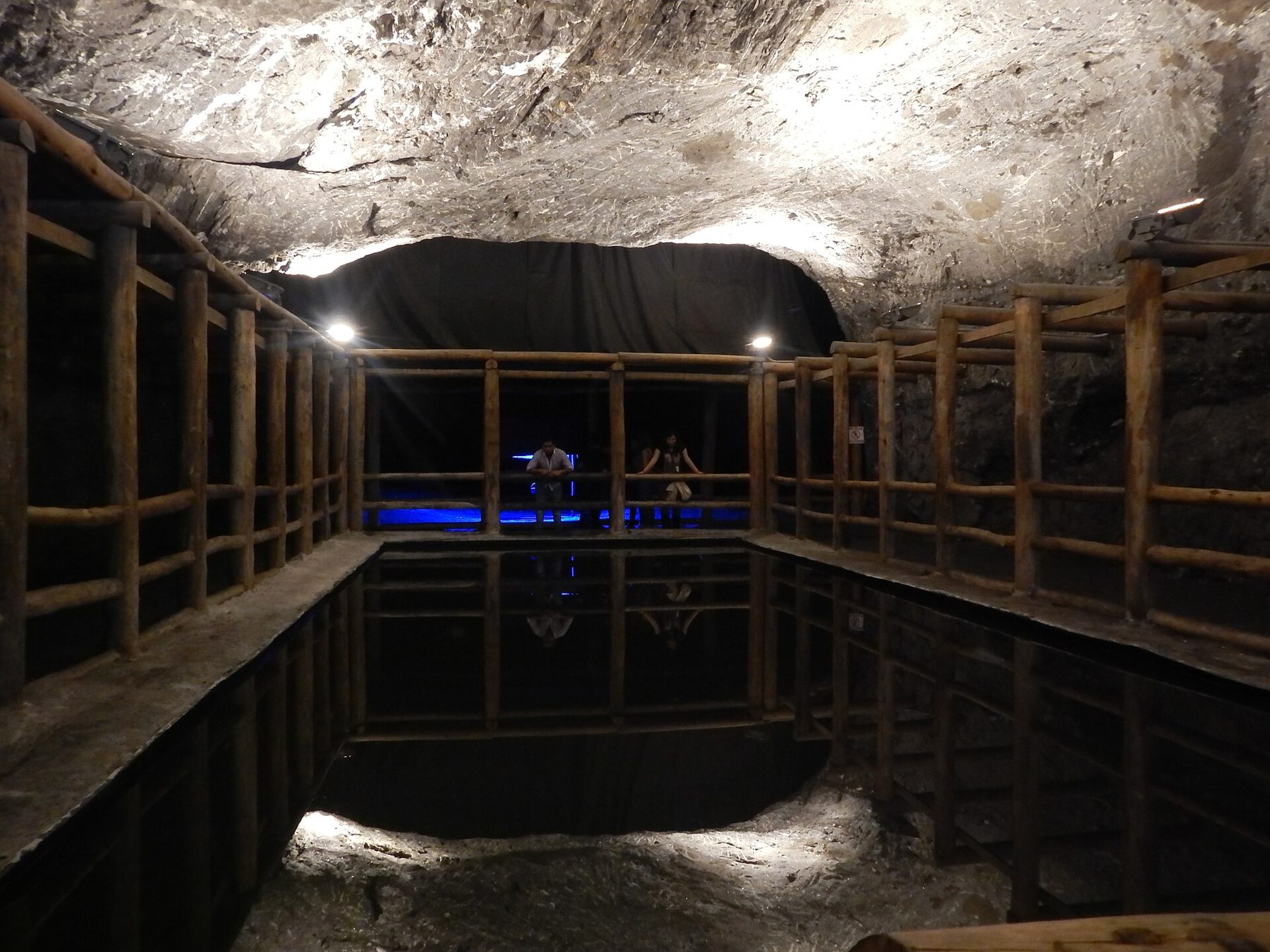
Fifty kilometres north of Bogotá, a working salt mine holds a cathedral 180 metres underground. Zipaquirá sits at 2,652 metres and averages 14°C, so carry a layer. The mine opened as the Salt Cathedral in 1995, after 250,000 tons of rock salt came out to make the room. A lit salt cross 16 metres high stands in the central dome. 6
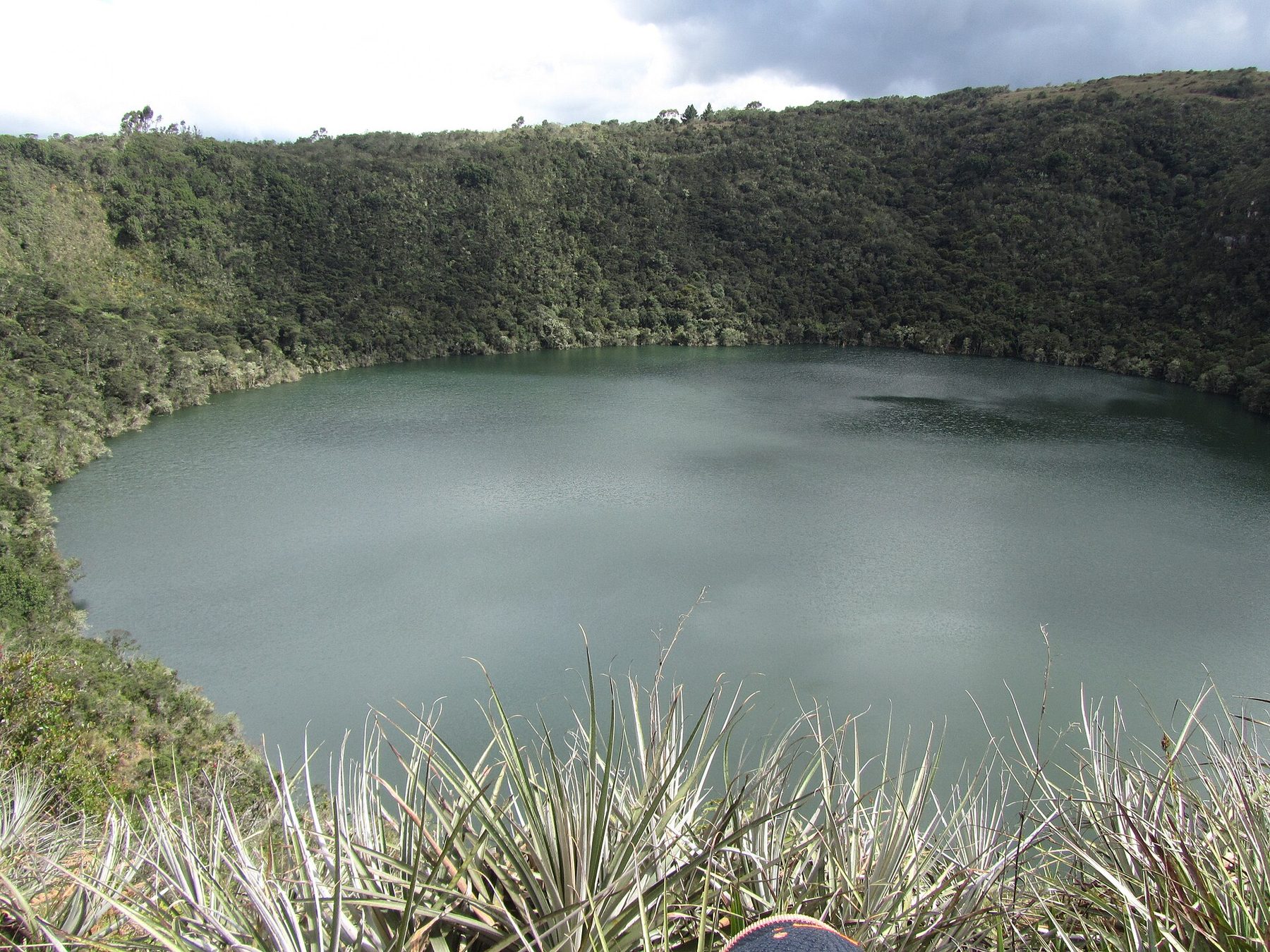
The second trip goes to water. Laguna de Guatavita is a round green crater lagoon in the hills above Sesquilé, sacred to the Muisca, and the place the El Dorado story starts. A trail climbs through forest to a viewpoint above it. 4
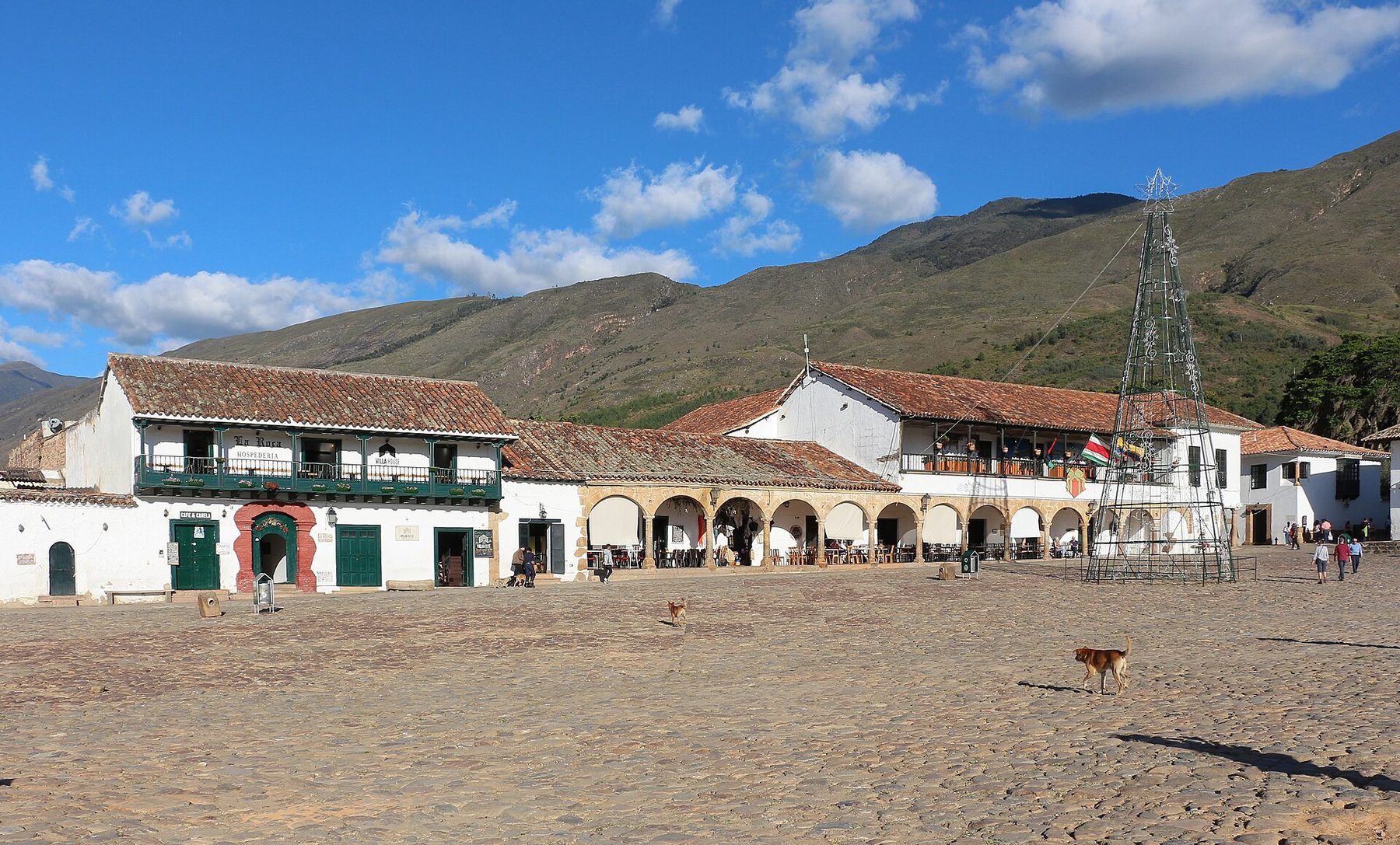
The third reaches further. Villa de Leyva, about 177 km north in Boyacá, keeps a plaza of 14,000 square metres at its centre and a church from 1604 on one side of it. That one asks for the whole day, and rewards a night. 5, 7
| Trip | Distance from Bogotá | Getting there | Adult entry, COP | Hours |
|---|---|---|---|---|
| Zipaquirá Salt Cathedral | 50 km | Car about 1 hour; bus 60 to 90 minutes; tourist train about 2 hours | 75,000 national / 125,000 foreign | 9:00 a.m. to 4:40 p.m., daily |
| Laguna de Guatavita, Sesquilé | - | Road only | 19,500 national / 28,000 foreign | - |
| Villa de Leyva | about 177 km | Car 2 hours 15 minutes to 3 hours 15 minutes by route | free to walk the town | Town streets, all day |
Guatavita's fees come from two Colombian outlets quoting the CAR, the regional authority that runs the reserve; the CAR's own page would not open for this research, and the two outlets differ by COP 1,000 on both the Colombian and the foreign adult fare. The road distance from Bogotá to the lagoon and the reserve's operating hours both stayed unconfirmed on a live source, so both are left blank here.
Table view: What a day at the Salt Cathedral costs per person
| Item | Value (COP) |
|---|---|
| Tourist train, shuttle and entry, foreign adult | 231,000 COP |
| Tourist train, shuttle and entry, national adult | 181,000 COP |
| Bus both ways and entry, foreign adult | 138,000 COP |
| Bus both ways and entry, national adult | 88,000 COP |
The train adds about COP 93,000 to the same hours underground. Buy it as the day out, not as transport. Bus fares are the carrier's own advertised price and drift with the route. Source: 1, 2
Two of these days run on a document check. The Salt Cathedral prices by nationality and asks for a passport or a valid national ID at the door, and Guatavita prices by where you live. Zipaquirá residents pay COP 20,000 on proof of birth or registration in the town. 1, 9, 3
How do you get to Zipaquirá from Bogotá?
The Cathedral's own directions name three ways in. By car, the North Highway through the Andes toll and on to the Chía-Zipaquirá road, about an hour. By bus, from the Salitre terminal or the Portal Norte TransMilenio station, 60 to 90 minutes, dropping at Carrera 15 with Calle 4, the Parque de la Esperanza. From there, a taxi, or about a 15-minute walk from the centre. 9, 6
The third way is the Tren de la Sabana, which runs at weekends and on holidays. It leaves Gran Estación at 8:45 a.m., picks up at Usaquén at 9:15 a.m. and pulls into Zipaquirá at 10:45 a.m. The return starts at 3:15 p.m., reaches Usaquén at 4:45 p.m. and Gran Estación at 5:15 p.m. Food and Cathedral entry sit outside the fare. 1
| Route | Time | Price, COP | Where it leaves from |
|---|---|---|---|
| Tourist train, round trip | about 2 hours each way | 96,000 adult 13-59; 90,000 child 3-12 or 60+ | Gran Estación 8:45 a.m.; Usaquén 9:15 a.m. |
| Station shuttle to the Cathedral | short hop, outbound only | 10,000, cash, bought on the train | Zipaquirá train station |
| Intermunicipal bus | 60 to 90 minutes | 6,500 advertised | Salitre terminal or Portal Norte |
| Car | about 1 hour | 13,000 flat-rate parking | North Highway to Chía-Zipaquirá |
Tolls and fuel sit outside the car line. Turistren sells the shuttle only on the outbound leg, so plan a taxi or the walk back to the station. The bus fare is marketing copy on the carrier's own site with no date on it.
How much are Salt Cathedral Zipaquirá tickets?
Basic guided entry runs about an hour and a half and costs COP 125,000 for a foreign adult. A Colombian adult pays COP 75,000. Children up to 12 and visitors 60 and over pay COP 110,000 and COP 60,000 on the same split. Turistren sells this ticket in cash aboard the train; the Cathedral sells at its own box office. 1
| Visitor | Price, COP | Price, USD |
|---|---|---|
| Colombian adult | 75,000 | 23 |
| Colombian child up to 12, or 60+ | 60,000 | 18 |
| Foreign adult | 125,000 | 38 |
| Foreign child up to 12, or 60+ | 110,000 | 33 |
| Zipaquirá resident, any age | 20,000 | 6 |
Converted at Colombia's official market rate of COP 3,306.86 to USD 1, certified for 26 to 28 September 2026 and rounded to the dollar. The resident rate asks for an ID showing birth or registration in the municipality.
The site opens every day of the week, 9:00 a.m. to 4:40 p.m., per its own operator. Colombia's tourism board lists a 5:40 p.m. close for the same place. The operator's page wins on its own hours, and the morning is the better half of the day either way. 8, 6
| Attraction or service | Price, COP |
|---|---|
| Miner's Route | 13,000 |
| Climbing wall | 16,000 |
| Naves de la Catedral | 15,000 |
| Nártex | 9,800 |
| Tutankhamun Museum | 16,000 |
| Archaeological Museum | 13,000 |
| Personalized professional guide | 110,000 |
| Flat-rate parking | 13,000 |
| Locker | 7,000 |
| Wheelchair | free |
The Miner's Route asks for a Basic or Standard passport first. The Cathedral also sells Standard and Premium bundles, whose totals load only inside its own cart, so they stay off this page.
What does Laguna de Guatavita cost to enter?
Entry runs COP 28,000 for a foreign visitor, COP 19,500 for a Colombian from elsewhere, and COP 4,000 for someone from the municipality itself. That is about USD 8 at the top tier. Visitors over 62 pay COP 13,500, COP 10,000 and COP 1,000 on the same three steps. 3, 10 The reserve sits off the road only: no bus, train or operator's own day-tour fare page opened for this research, so the price of getting there is still missing.
| Visitor | Price, COP | When |
|---|---|---|
| From the municipality | 4,000 | any opening day |
| Colombian, from elsewhere | 19,500 | any opening day |
| Foreign visitor | 28,000 | any opening day |
| Over 62, from the municipality | 1,000 | any opening day |
| Over 62, Colombian | 10,000 | any opening day |
| Over 62, foreign | 13,500 | any opening day |
| School or university student | 9,500 | weekdays |
| Group over 25 people | 13,500 | weekdays |
| Group from a public body | 12,500 | weekdays |
Pulzo published these on 5 January 2025, quoting the CAR's own tariff page by name. Noticias Caracol, writing in August 2024, gives COP 18,500 and COP 27,000 for the two adult tiers. The CAR's own page would not open for this research, so carry the higher figure and check before you pay.
The walk is the visit. A trail climbs through the forested hills to a viewpoint over the lagoon, and the water itself stays off limits for a picnic or a night's camping. Boating, kayaking and paddleboarding belong to the nearby Embalse de Tominé, not the sacred lagoon; treat swimming and boating there as off-limits by the site's guided-only design, since no posted rule for the lagoon covers them. 4, 3
Where the El Dorado story comes from
Colombia's tourism board tells the lagoon as the origin of El Dorado. Muisca zipas rowed to the middle of the water covered in gold dust and let offerings of gold and emerald fall in. Colonial authorities set out to drain it and reach the riches below. Some pre-Hispanic pieces surfaced. The treasure stayed a story. 4
There is a documented object at the centre of it. In 1969 Cruz María Dimaté, a campesino near Pasca in Cundinamarca, found gold and ceramic pieces in a cave and took them to the parish priest, Jaime Hincapié Santamaría. Banco de la República acquired the raft for the Museo del Oro, where the Muisca goldsmiths' raft shows the cacique of Guatavita's ceremony. 11
Muisca government is present tense. In Suba, a locality of Bogotá, the Cabildo Indígena Muisca de Suba describes its people as the Muysca community of Suba, holding that territory since before Gonzalo Jiménez de Quesada arrived in 1537. The national and district governments ratified the Cabildo on 25 January 1991. Its own 2023 census counts 3,481 families and 10,341 people. 12
Suba is a different place from Sesquilé, where the lagoon sits. Ask your guide whose territory the trail crosses, and take the answer from them.
Is Villa de Leyva from Bogotá a day trip or an overnight?
About 177 km, and the fastest road takes 2 hours 15 minutes. That route runs the North Highway to the Puente de Boyacá and Samacá, with four tolls out and three back. Through Tunja and Cucaita it is 2 hours 50 minutes; through Tunja and Arcabuco, 3 hours 15 minutes. The Zipaquirá, Ubaté and Chiquinquirá line covers 188 km in about 3 hours. 5
| Route | Distance | Driving time |
|---|---|---|
| North Highway, Puente de Boyacá, Samacá | 177 km | 2 h 15 m |
| Tunja and Cucaita | about 177 km | 2 h 50 m |
| Tunja and Arcabuco | about 177 km | 3 h 15 m |
| Zipaquirá, Ubaté, Chiquinquirá | 188 km | about 3 h |
These figures come from a private tourism directory for the town, the only source found with a consistent route breakdown; other calculators returned 150 to 188 km for the same trip. Treat them as approximate.
What the drive buys: a Plaza Mayor of 14,000 square metres, the largest in Colombia, with the Parish Church of Our Lady of the Rosary from 1604 on one side. The town became a National Monument in 1954. The Paleontological Museum holds 2,425 pieces with 441 on display, and the El Fósil Museum, founded in 1977, keeps a Kronosaurus boyacensis hampe pliosaur that local farmers found. 7
Four and a half hours of driving for a day trip is a hard sell, and that is the best-case route. Leave at dawn and it works. Give it a night and you get the plaza at 7 a.m. with the light low and the cobbles empty. Bus fares on this route run through several carriers, and no carrier's own fare page opened for this research, so budget roughly and confirm at the terminal. 5
A train day, hour by hour
One weekend, one train, one mountain of salt. This is the shape of the day on the published timetable, with the cash you need at each point. 1
8:45 a.m., board at Gran Estación
The train leaves the west-side station at 8:45 a.m. and picks up at Usaquén at 9:15 a.m. The round trip is COP 96,000 for an adult 13 to 59, and COP 90,000 for a child 3 to 12 or a passenger over 60. 1
On board, buy the entry and the shuttle in cash
Turistren sells Basic Cathedral entry and the one-way station shuttle aboard, cash only, on the outbound leg: COP 125,000 for a foreign adult plus COP 10,000 for the hop. Colombian ATMs add their own fee to your bank's, so compare them before you land. 1, 9
3:15 p.m., the return
Usaquén at 4:45 p.m., Gran Estación at 5:15 p.m. That is the whole day, which is why Guatavita waits for another one. 1
What to check before you pay
Four numbers on this page carry a date and a caveat. Two minutes of checking saves the afternoon, and one of them saves the weekend.
- The CAR's own tariff page for Laguna de Guatavita, for the fee on the day you go. Two Colombian outlets quoting it differ by COP 1,000 for a Colombian adult and COP 1,000 for a foreign one. 3
- Turistren's schedule for your date. The carrier has posted service gaps with no cause given. 1
- The Standard and Premium bundle prices, which load only inside the Cathedral's cart. Basic entry is the one total readable as text. 9
- The bus fare at the window. TransAlianza advertises COP 6,500 to Zipaquirá on its own site, as marketing copy with no date, and departures every 15 to 30 minutes from 5:30 a.m. to 11:00 p.m. 2
These days sit inside a longer trip. The one month in Colombia route puts Bogotá in order with the coast and the coffee region, and the Colombia hub holds the rest.
Frequently asked questions
Do I need to buy Salt Cathedral tickets in advance?
You can buy Basic guided entry aboard the tourist train in cash on the outbound leg, at COP 125,000 for a foreign adult and COP 75,000 for a Colombian adult, and the Cathedral sells at its own box office too. Its Standard and Premium bundles price only inside the online cart. Arrive in the morning: the site closes at 4:40 p.m. 1, 8
Can I do Zipaquirá and Guatavita in one day?
By train, the day is spoken for: 8:45 a.m. out, 5:15 p.m. back. By car they sit on different roads out of Bogotá, and Guatavita's own hours could not be confirmed on a live source, so give it slack rather than a tight pairing. Give each one its own day. 1
How much is the bus from Bogotá to Zipaquirá?
TransAlianza advertises COP 6,500 on its own site, with departures every 15, 20 or 30 minutes between 5:30 a.m. and 11:00 p.m. from the north terminal. That figure carries no date. Treat COP 6,500 as the floor and confirm at the terminal. 2
Is Laguna de Guatavita open on Mondays?
The reserve's exact hours and days could not be confirmed on a live source. Two Colombian outlets that quote the CAR's fee table do not state hours in the text available. Check the CAR's own page or call ahead before you drive out. Entry is COP 28,000 for a foreign visitor. 3
What does Villa de Leyva cost to visit?
The plaza, the streets and the churches cost nothing to walk. The spending is the road: about 177 km each way, three or four tolls per direction, and a bus fare quoted only by aggregators, with no carrier page open to confirm it. Budget the fuel and the tolls first. 5, 7
Which day trip works best without a car?
Zipaquirá. Buses leave the Salitre terminal and the Portal Norte TransMilenio station every 15 to 30 minutes and take 60 to 90 minutes, dropping at Carrera 15 with Calle 4. The tourist train covers weekends and holidays from Gran Estación and Usaquén. Guatavita and Villa de Leyva both ask more of you. 9, 2, 6
Is the Salt Cathedral worth COP 125,000?
For a foreign adult that is about USD 38 at the official rate for 26 to 28 September 2026. It buys a guided hour and a half, 180 metres down, inside a mine that gave up 250,000 tons of rock salt to make the room, ending at a lit cross 16 metres high. Colombians pay COP 75,000 and Zipaquirá residents COP 20,000. 1, 6, 9, 10
Sources & review date
Researched 2026-09-28. Prepared from primary sources, with a separate independent source review. Numbered notes in the text point to the sources below. Prices, entry rules and schedules change; use the linked authority for your dates.
- 1Planifica tu viaje: tarifas, horarios y servicios del Tren de la Sabana Turistren (Tren de la Sabana) · Accessed 2026-09-28 · Primary source
- 2Viaje en bus Bogotá-Zipaquirá al mejor precio Transportes Alianza · Accessed 2026-09-28 · Primary source
- 3Cuánto cuesta el ingreso a la laguna de Guatavita en 2025 y a qué hora abre Pulzo, quoting the Corporación Autónoma Regional de Cundinamarca · Accessed 2026-09-28
- 4Near Bogotá: Soacha, Guatavita and La Calera ProColombia / Colombia Travel · Accessed 2026-09-28 · Primary source
- 5Ruta Bogotá - Villa de Leyva villadeleyva.net, a private tourism directory · Accessed 2026-09-28
- 6Salt Cathedral of Zipaquirá ProColombia / Colombia Travel · Accessed 2026-09-28 · Primary source
- 7Villa de Leyva ProColombia / Colombia Travel · Accessed 2026-09-28 · Primary source
- 8Boletería: horarios y atracciones Parque de la Sal Zipaquirá · Accessed 2026-09-28 · Primary source
- 9Tarifas y cómo llegar Parque de la Sal Zipaquirá · Accessed 2026-09-28 · Primary source
- 10Tasa representativa del mercado (TRM), 26 to 28 September 2026 Superintendencia Financiera de Colombia, via datos.gov.co · Accessed 2026-09-26 · Primary source
- 11La Balsa Muisca y El Dorado Banco de la República, Museo del Oro · Accessed 2026-09-26 · Primary source
- 12Somos: Cabildo Indígena Muisca de Suba Cabildo Indígena Muisca de Suba · Accessed 2026-09-26 · Primary source